
The Wild Side of Service
For this month’s group article, we are finding ourselves in Thailand’s animal kingdom. Our writers explore the question: “What is your Thai spirit animal?”
Through personal stories, cultural reflections, and humorous comparisons, volunteers share the animals native to Thailand that best capture their personalities, experiences, and adaptation to life in Thailand.
Holly Lingenfelter, 136 YinD
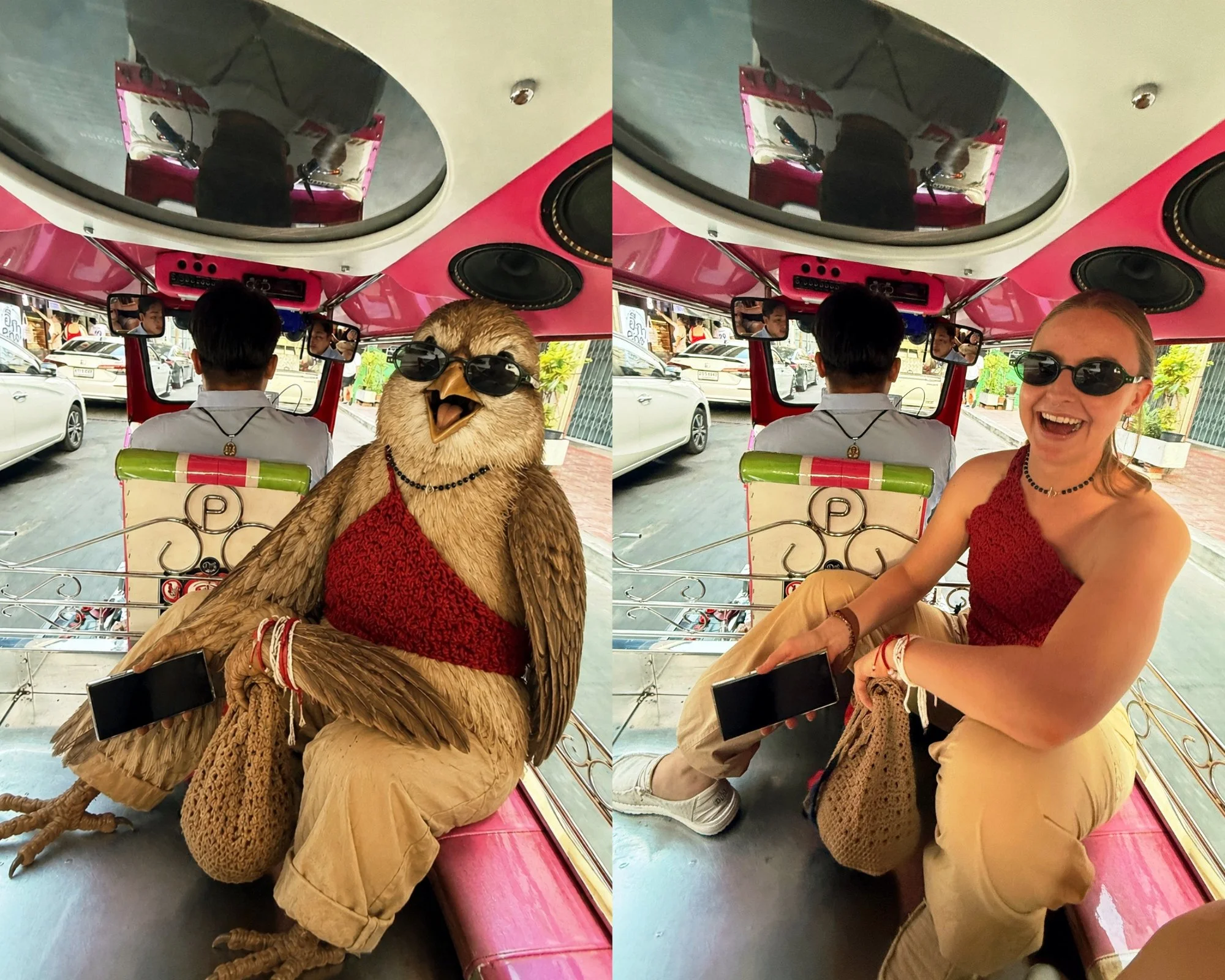
Image generated using ChatGPT.
Cue “I’m like a bird” by Nelly Furtado. Sadly, my spirit animal is not Ms. Furtado (though my style may be similar to that of hers in the music video). When I asked my counterpart which Thai animal I most embody, his response was a bird because “you like to travel.”
I do, in fact, love to travel. While I love my province and community, I try to soak up every day off by exploring all the beautiful places Thailand has to offer. Most Thai people, especially from my rural village in the Northeastern region of Thailand, do not travel much. I can see why, because we are an 11 to 12-hour bus ride away from Bangkok, and a 15-hour bus ride away from Chiang Mai. So going anywhere outside of my province is quite a journey and requires either lots of time or the money to afford the 1-hour plane ticket to Bangkok.
But to me, it’s worth it to see the beautiful beaches, turquoise waters, lush mountains, and the kind, generous communities around Thailand. Before coming to Thailand, I promised myself I wouldn’t travel back home to the States, but instead see as much of this incredible country as I can. And while the past holiday season was more difficult than I anticipated, especially with the added envy of other volunteers who traveled home to spend time with their families, I'm filled with an immense amount of joy from the experiences and memories I’ve made from exploring new areas of Thailand.
Every time I travel outside my province, I fall more in love with Thailand and more in love with the slow, simple life here in Nakhon Phanom. While sometimes I miss a classic American breakfast you can only get in bigger cities like Bangkok, there’s also something about a Khao Tom (rice porridge) that hits differently when my Thai mom and I cook it together. Using Nakhon Phanom specialty rice noodles instead of the classic jasmine rice, and with ginger, garlic, coriander, and green onions fresh from the garden, all while we sit and enjoy the view of the Mekong River. In my humble opinion, the food in Nakhon Phanom, with its fresh ingredients nourished by the Mekong River, and its unique flavors from Vietnamese influence, is the best in all of Thailand.
Inside my village, I’m Teacher Holly, known and watched by everyone; but when I travel, I’m just another tourist that no one knows. Both roles have their positive and negative qualities, a feeling most volunteers know well. But how special it is that we all have a place here in Thailand we call home when we get tired of being just another “farang” with money to spend. While sometimes it’s needed to get out of my small village, which can sometimes feel like a fishbowl, I always come back for the food and the family I’ve made here. Just like a bird, I travel and migrate far, but always return home to my nest. It’s all about balance, something birds know very well.
Chloe Hudgins, 136 YinD
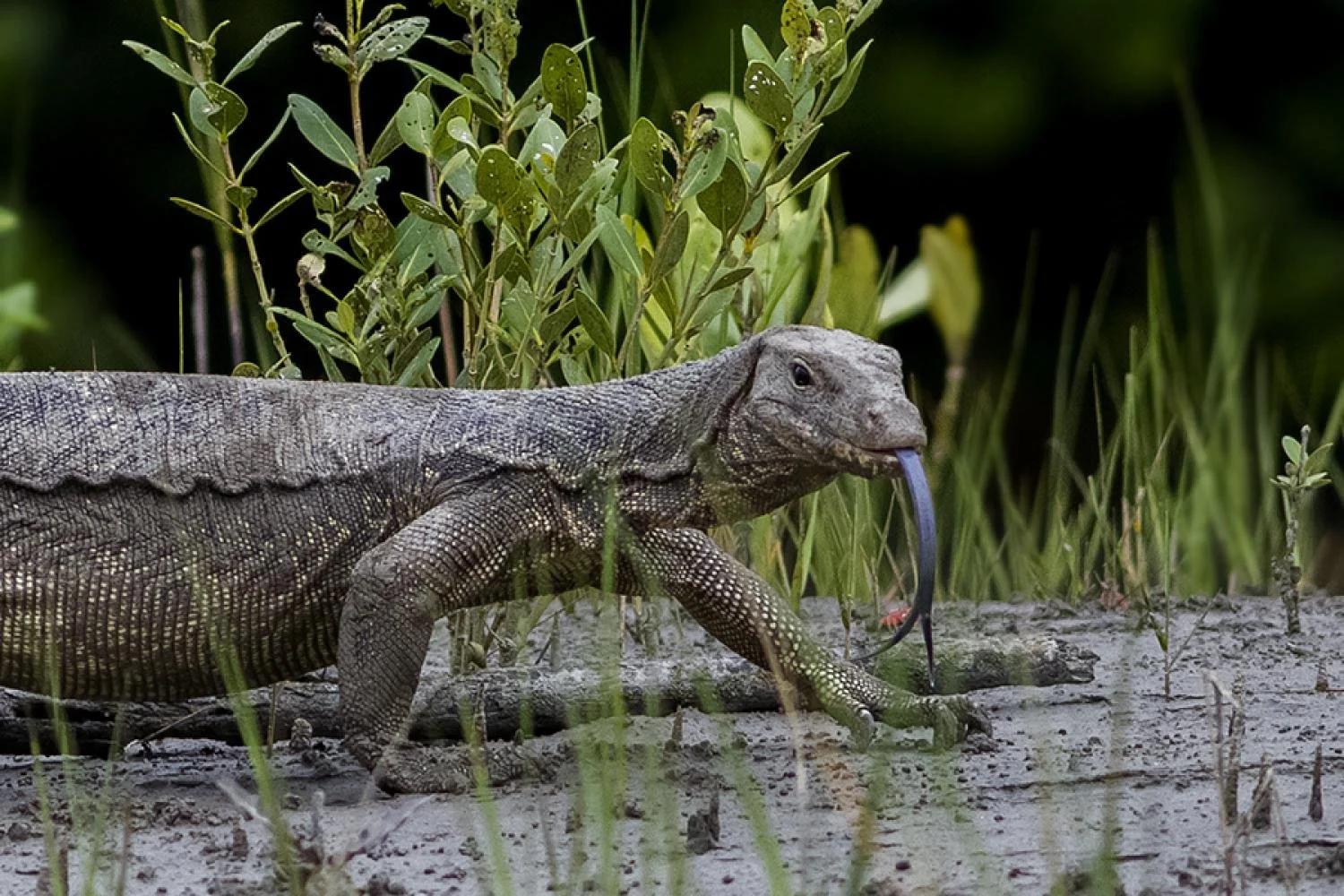
Image courtesy of Thai National Parks.
The water monitor lizard deserves a rebrand. These poor creatures get slammed all the time as rat-like, annoying, and gross scavengers. They’re bad luck, their Thai name is a deeply profane word, and they are associated with death and decay.
Which is frankly insulting, because I love these weird little dinosaurs and I think they’re the coolest. I’ve come to think that water monitor lizards are my…spirit animal. I love catching a rare glimpse of them at site, and it’s always funny for Thai people to see my gleeful reaction.
Water monitors are semi-aquatic and strong swimmers, living in and out of the water. The lizard—colloquially called ‘dtua ngoen dtua thong’, or ‘silver and gold creature’ to avoid the profanity of its actual name—commonly haunts canals, lakes, and small ponds. This proximity to waste and scavengery is where their negative reputation comes from.
But I see them differently: as survivors who are able to live in challenging environments (just like PCV’s!). They thrive in places other animals cannot.
Thai people see them as skulking around small bodies of water, but to me, they are sunning themselves outside. They need to regulate their body temperature, just like I need to regulate my mental temperature! Thailand is hot already, yes, but my day gets at least 10% better the moment the sun hits my face.
If I could choose a Thai animal to relate with, it would be the water monitor lizard.
Maggie Dineen, 137 TESS
Water Goats and Broken Promises
When I was in fifth grade, my dad won two free tickets to Ireland. Every August, my family would go to the sprawling Summerfest grounds in Wisconsin, home to the annual Irish Fest. We would eat the addictive green shamrock sugar cookies, listen to a Lindsey Sterling performance, and of course, watch me perform Irish dance.
It was always a gamble whether the stage would get rained out, or if our makeup would melt off from the heat. That year, there was a tremendous storm. Thankfully, I was already done performing for the day so my family hung out in a pavilion drinking Guiness, eating baked potatoes, and enjoying good company.
When the skies cleared for a brief moment, my dad announced he wanted to look at the travel booths, where they held their annual lottery for a free trip to Ireland. My mom and brothers didn’t want to make the walk. They said it would be pointless to put our names in the drawing since thousands of people try every year.
For the record, my dad promised that if he won, he would take me. But, when the winning email announcement came, there was a brief argument about “marriage”, and my mom took the promised spot.
I absolutely still hold this over my dad’s head twelve years later.
While I sulked about my stolen trip, I hatched a bit that would span years. It started with a simple question from my mom.
“What do you want from Ireland?” She asked.
For some reason, the obsession I landed on was sheep.
Looking back, it really wasn’t a great joke. I asked for my parents to bring me back a sheep, to put one in a suitcase and ship it all the way to our house in Milwaukee, Wisconsin, where I could take care of it. I knew it was impossible (and now I know about animal cruelty), but I think I asked for such an impossible gift because I wanted my dad to make up for his broken promise.
The following year, I entered middle school.
I was a weird middle schooler. I listened to the Red Hot Chili Peppers, joined the wrestling team, and drew pictures of sheep and gave them to my sixth-grade social studies teacher. I blame my older brothers for the first two hobbies, but the last one is all me.
Of course, my sheep were fitted with everything and anything—bat wings, MMA belts, “I <3 MOM” tattoos, sweat bands, rainbow parkour courses—–you name it. I, thankfully, stopped drawing deformed sheep, but the inside joke eventually grew into a nostalgic love for the animal.
Now, I live in a northern Thai village as a Peace Corps Volunteer. My site is a vibrant blend of Thai Yai, Chinese, and Thai communities. The village speaks a multitude of languages, proudly wears traditional dress, and houses some of the best culinary dishes I’ve ever tasted.
Recently, a stray cat bore three kittens on the roof of my host family's home. It really was a great ruckus, but the three fur babies now live outside our house. While I’ve certainly enjoyed the company, my host mom doesn’t keep pets.
She told me once that because she was born in the year of the horse, it is bad luck for her to care for an animal. This promptly led me down the rabbit hole of Chinese zodiac signs.
Call it predetermined fate, destiny, or coincidence, but my zodiac sign is a water goat. In Chinese history, there is little distinction between a sheep, goat, and ram. It is said that Water Goats are hardworking, creative, peace-orientated, and timid. While I still have more to discover about Chinese zodiacs, I’ve enjoyed how my childhood fascination aligns with my current life at site. After all these years, I finally found my own sheep on a free trip overseas.
Hannah Fairweather
A spirit animal is supposed to be a symbolic animal that reflects a person’s personality, energy, strengths, instincts, or life path… at least that’s what ChatGPT told me when I looked it up.
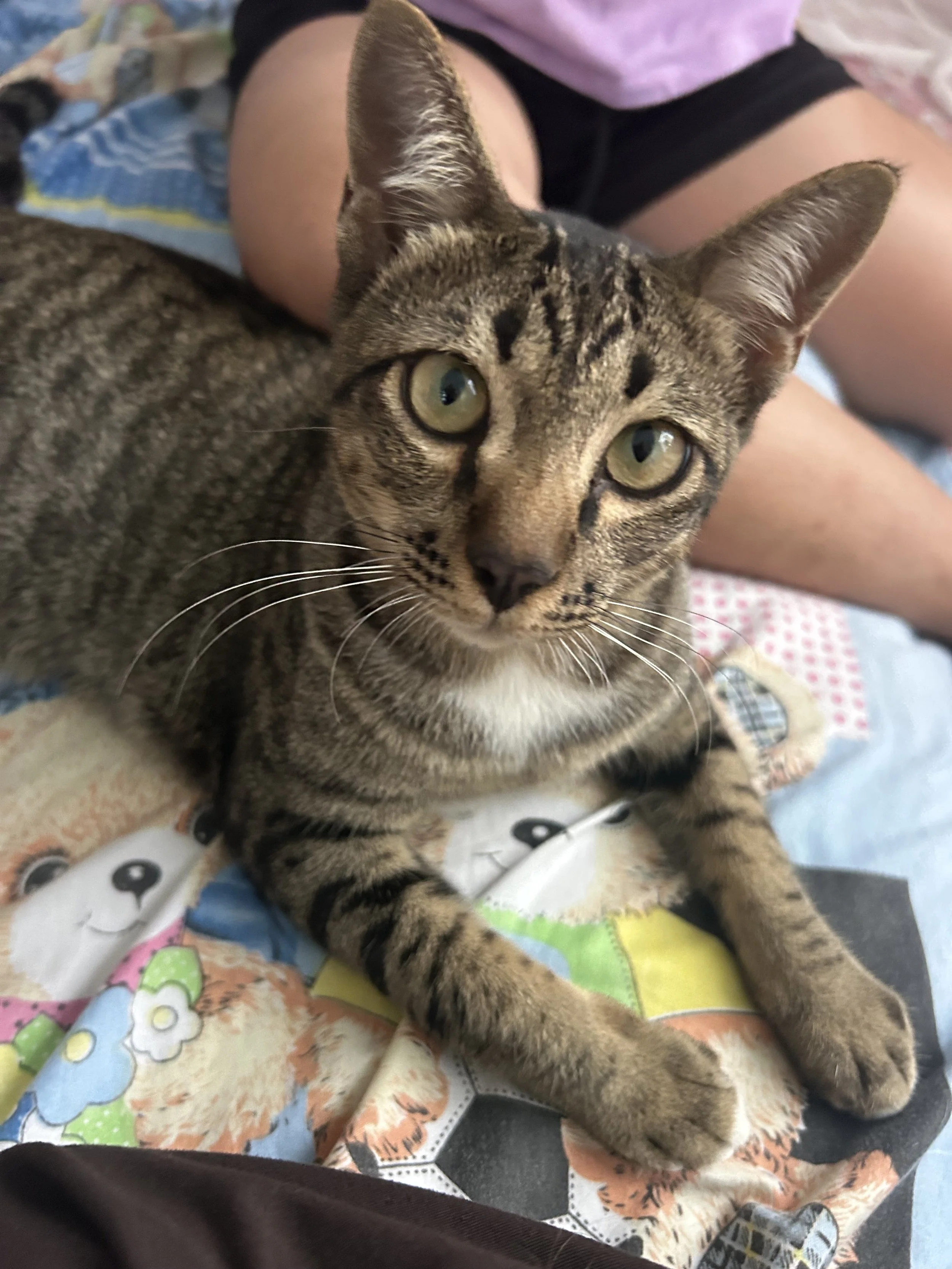
Before coming to Thailand, I would have loved for my spirit animal to be a cat. Cats are cute, cuddly, independent, smart, clean, and perfectly content doing their own thing. I thought that fit me pretty well. But Thai cats are different. The ones I’ve seen here are wild and free. They roam around neighborhoods, play with each other, chase random things, climb everywhere, and somehow survive entirely on vibes. I’m way too domesticated for that lifestyle. It is hard to pick a Thai spirit animal when you consider yourself domesticated. Thai animals seem to live with a level of freedom and confidence I can only admire from a distance. If you’ve met a Thai dog, you know exactly what I mean.
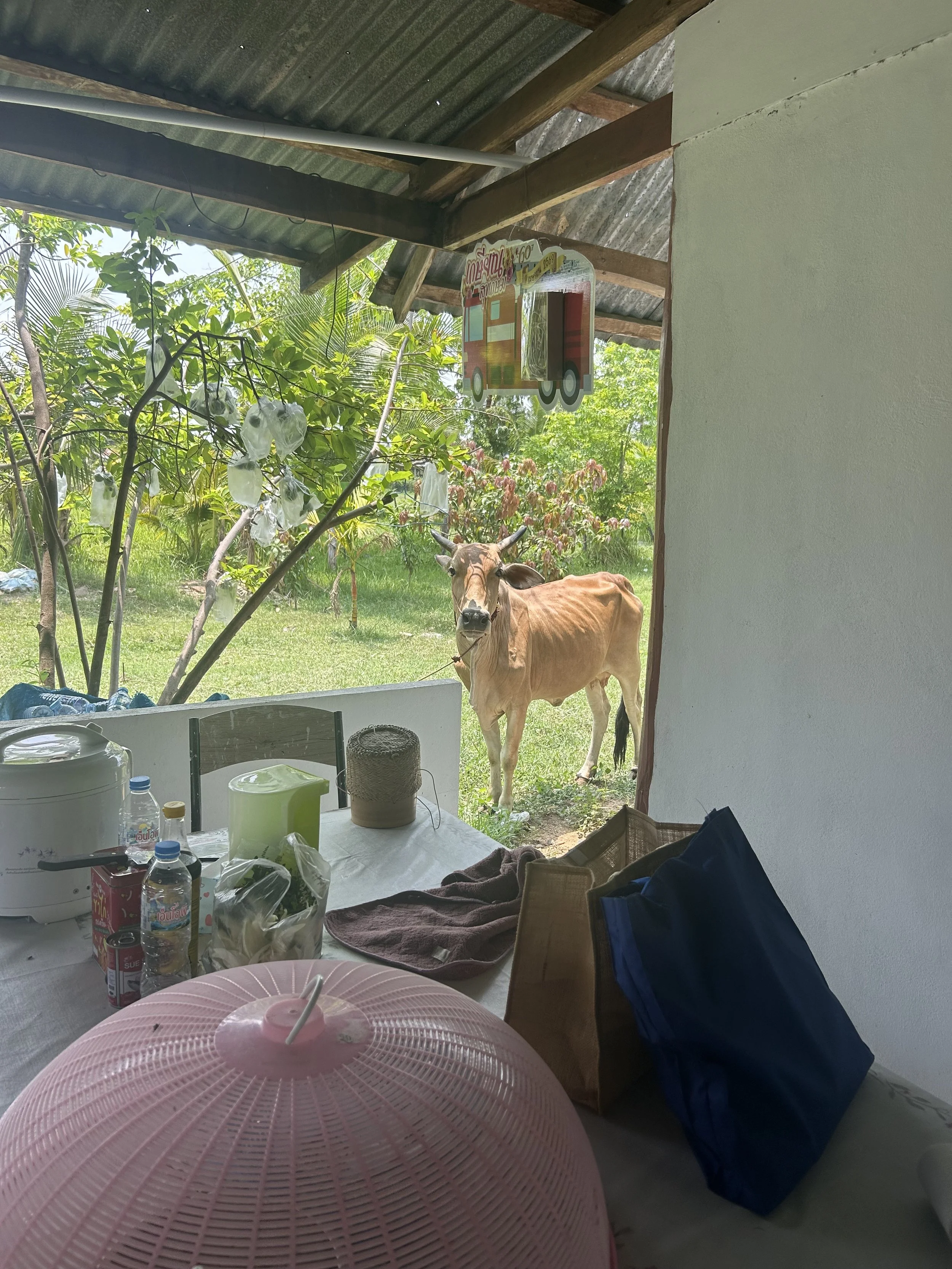
If I had to choose the Thai animal that most reflects my energy and character, it would unfortunately be the cows. Not because they’re majestic or spiritually enlightened, but because every cow I’ve seen in Thailand looks simultaneously calm, confused, overheated, and completely unbothered by what’s going on around it while it eats. This feels pretty accurate, except for the “smelly” part. Thailand has me showering three times a day, minimum.
Ella Spear, 136 TESS
My brothers and I grew up running through our woods in Maine, following the game tracks that cut low under dense pine trees and crossed through rocky hills. A core memory of my childhood was a game we played with our dad in the woods, called Tracker. We would give our dad a ten-minute head start before plunging into the forest after him following obvious clues he left on his way to a final hiding spot. One day, after what felt like hours of tracking, we came to a clue pointing forward. We followed, but found there was nothing ahead.
Confused, we backtracked to the marker. “Shhhh” my oldest brother whispered. “Let's be quiet and wait to see if we can hear anything.” For once, we actually stood still and scanned the forest floor around us. In the distance, my eyes fixed on a ray of light shining in through the canopy. Mystically, a small red fox was staring directly back at me
Crack crack.
The sound of broken sticks came from above our heads.
We looked up to see our dad grinning as he clung to a somewhat-too-small pine tree right above the clue. We laughed with excitement. I looked back and the fox was gone.
When I think about spirit animals, I think about creatures that I want to be, rather than what I think I am. I love the idea of being a fox, but how could I really ever be that cunning, quiet, calculated, and elegant? No, I am self-aware enough to know I am closer to one of those chaotic little goats—the ones that jump over your fences and eat your entire garden, bleating loudly along the way. Yet even the goat has many qualities I could never match. It’s been a struggle to find the answer to the prompt of my Thai spirit animal. Despite online quizzes and asking AI for inner meaning, I didn’t find anything that connected with me spiritually.
My gut instinct brought me back to my sighting of this fox. I had decided I couldn’t use that for this prompt because Thailand doesn’t have a fox population, which, according to Tucker is, “A very well-known fact.” However, upon further research, I think I found a suitable animal to take its place.
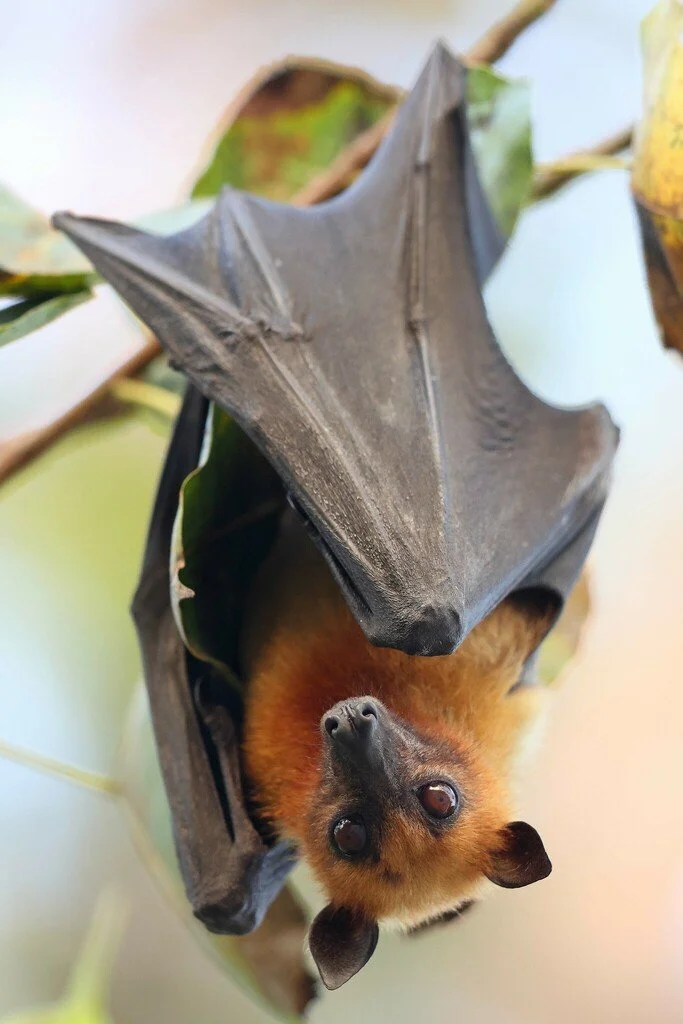
Lyle’s flying fox. (Bocos, 2022)
In fact, this is not a fox at all, but a giant fruit bat native to Thailand. The Lyle’s flying fox is a large bat with a red underbelly, pointed nose and ears, and reddish-black wings, leading to its name: the flying fox. I have never seen one up close, but these giant bats swoop out from their caves, forests, or temples at sunset to feast. The flying fox is endemic to the Gulf of Thailand, Cambodia, southwestern Vietnam, and parts of southern China. The bat tends to feast in orchards across the vast Thai farmlands traveling up to 30 miles between roosts, and munching on mangoes, rose apple, cashews, and other yummy delights (iNaturalist, n.d.).
If I can relate to any animal right now, it has to be one that makes it its daily mission to eat as much fruit as it can before going back to the forest to rest, and hence, I will settle on this gorgeous giant flying fox as my Thai spirit animal.
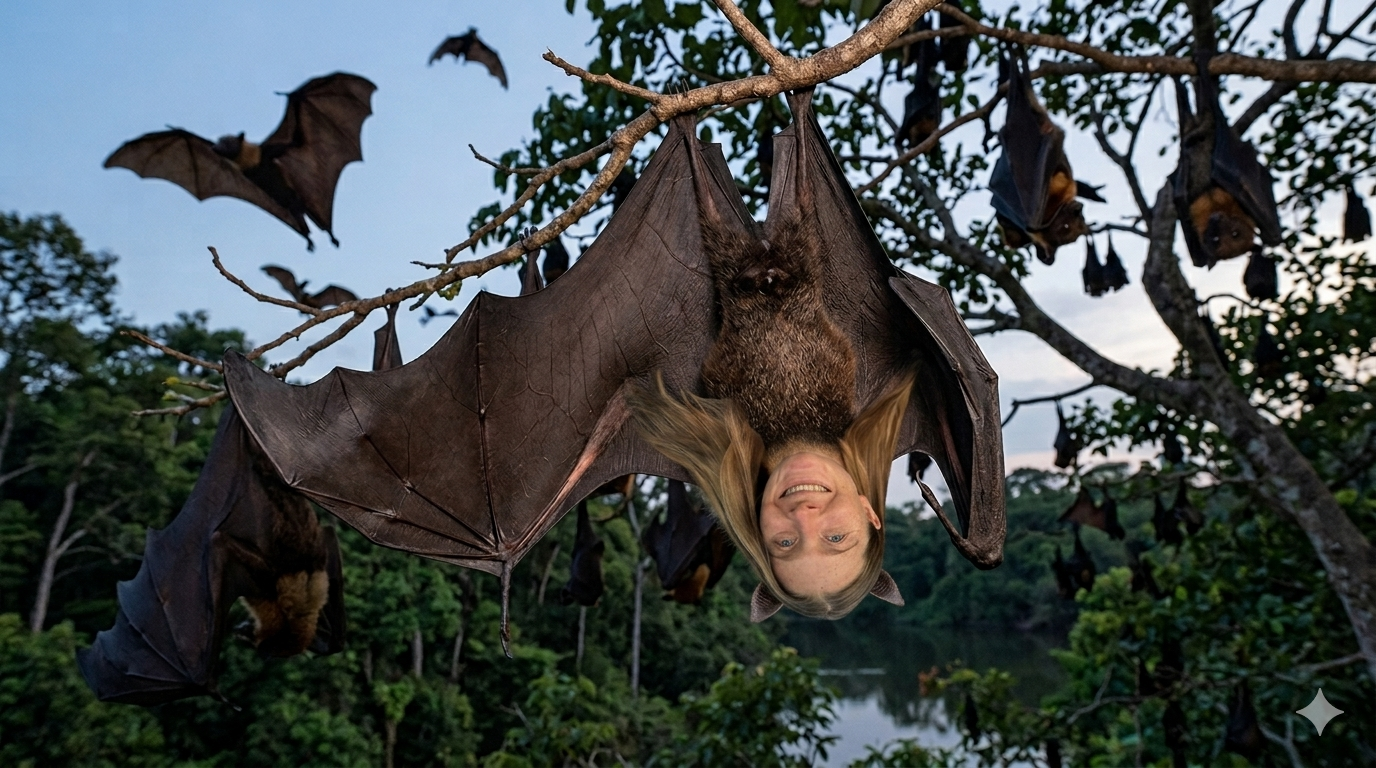
Photo courtesy of Gemini Photo Generator.
Sources:
Bocos, C. N. G. (2022). Lyle's flying fox (Pteropus lylei) [Photograph]. iNaturalist. https://www.inaturalist.org/photos/242629743
iNaturalist. (n.d.). Lyle's flying fox (Pteropus lylei). Retrieved May 26, 2026, from https://www.inaturalist.org/taxa/40898-Pteropus-lylei
Jess Smith, 136 YinD
Jing-Joking Around
It is often believed that you do not choose your spirit animal but it chooses you. But how? Does it come up and tap you on the shoulder and say “hey I’m your spirit animal let’s grab a beer”? Or is it this gravitational pull that brings you together in the universe? Whatever it is, I think since being in Thailand I have found that I resonate with jing-joks, also known as the common house gecko.
At first it struck me as odd, so many geckos living under one roof. My roof. It felt like I needed to get rid of them. In America, we are so keen on exterminating “pests”, but these geckos aren’t really pests at all, rather they are a good fortune.
Jing joks have shown me silliness, companionship, and that it is okay to belong in a space without dominating it.
When I was first staying with my host family, I heard these chirping sounds in the night. And I’ll be honest, I thought it was a bat or some kind of rodent, so I slept with the light on sometimes. But I eventually put two and two together. Now when I hear them at night in my house all alone, they remind me that I am not and I find comfort in their company.
As I watch them chase each other on the wall, I like to imagine they are playing tag. I’d like to think that I bring that kind of carefree silliness to my friends. They remind me not to take life so seriously and that friendship, the kind that offers joy, is even more important.
Sam Vansomphone, 137 TESS
Across its many thriving ecosystems, Thailand is home to thousands of unique species. From pink dolphins to flying lizards, you truly can find anything here. With this wealth of fauna, how could I ever choose one as my Thailand spirit animal? Shockingly, it was quite easy. The second the topic was announced, I knew which curious critter I wanted to talk about. So, I am happy to have the pleasure to introduce you all to the binturong.
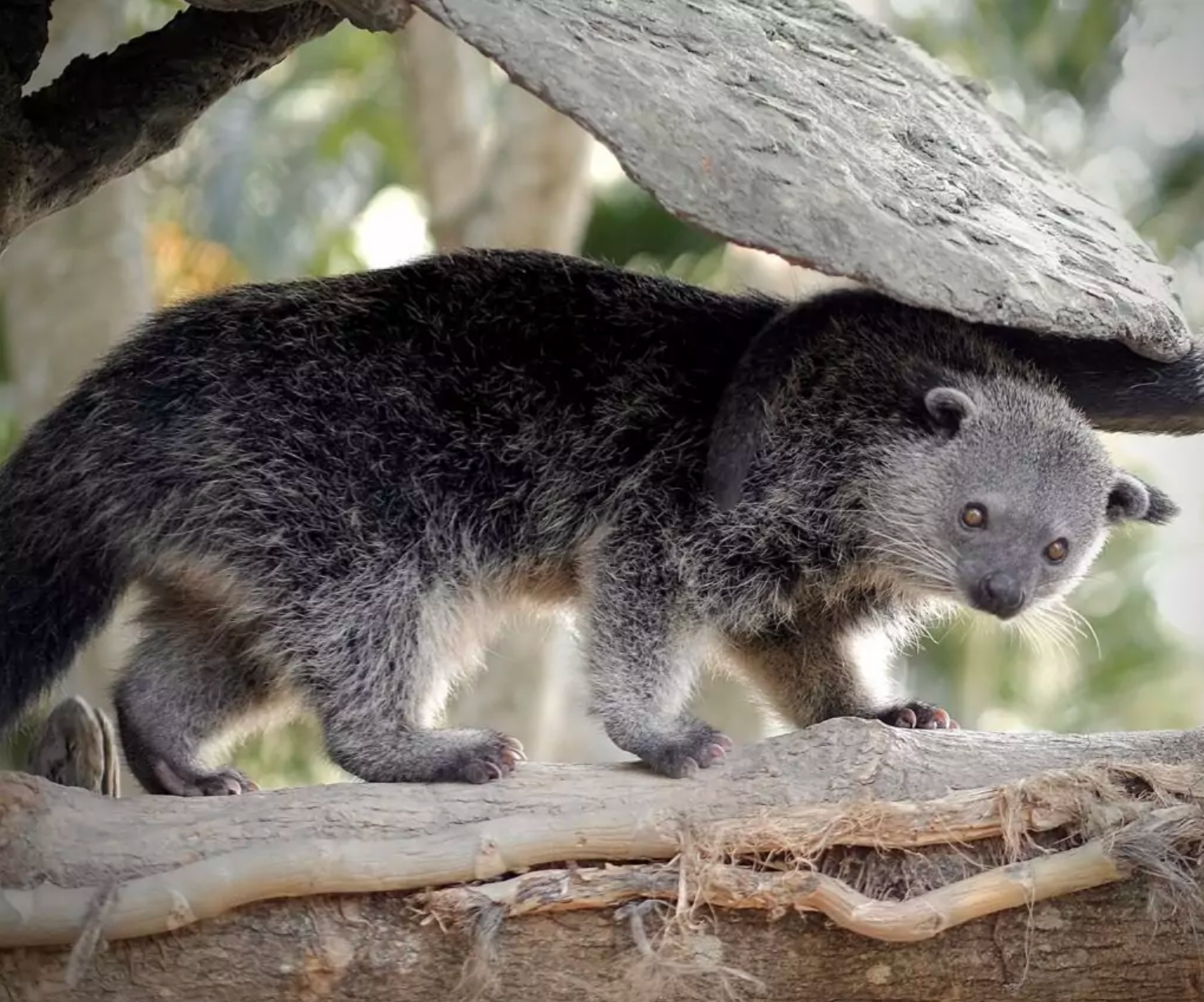
Image courtesy of Taman Safari Bali.
The binturong, otherwise known as the bearcat, is a feliform. This means it is kind of cat-like, but also not really. Much like cats, binturongs love to climb trees, groom themselves, and curl up in cozy spots. Their most notable difference would probably be their appearance, looking more like a small bear or giant weasel. As to why they are my spirit animal, binturongs are nocturnal, eat about anything, and have a perpetual case of bedhead. That might just be the most relatable animal I have ever heard of. Alas, those words can also describe many other species, so what makes the binturong stand out?
I think there are two distinct traits that define the binturong and luckily, both are quite relatable to me. First, figs are a major part of their diet. In fact, they are a keystone species; many habitats rely on binturongs to spread fig seeds. While I am not nearly as ravenous, I was quite a big fan of Fig Newtons growing up and would consider myself a keystone consumer of the snack whenever available. Second, and more interestingly, they smell like popcorn. As much as I wish, I unfortunately do not share this trait. However, I love movies, I love going to the theatre, and I love indulging in a large bucket of popcorn. Although it isn’t a perfect match, I find this detail to be oddly fitting.
Honestly, I could spend all day talking about the binturong, let alone the rest of Thailand's animal population. So many wonderful and bizarre creatures live across this country, which is one of Thailand’s many charms. While many of them are eye-catching and attention-grabbing, I do ultimately play favorites. If I could only choose one, I would always choose the binturong.
Olivia Fee, 137 TESS
After much deliberation, I concluded that my Thai spirit animal is a cat. This probably comes as no surprise to people who know me, given that I’ve always been a devout cat person. And no, it’s not just because I dearly miss my cat, Patches, back home, though that’s not out of the question. A part of me wishes I resonated with some cooler and more unique pick, like the monkeys, elephants, and tigers people usually associate with Thailand. Or even the call of the bird I hear outside my window as the daytime heat wanes into a peaceful evening. But I knew my choice took root the moment I first observed Thai cats on the busy streets of Bangkok– how they expertly navigated their way through the various smells, sounds, and sights of the city with insouciance. As simple as it might sound, I’ve always admired this quiet sense of confidence.
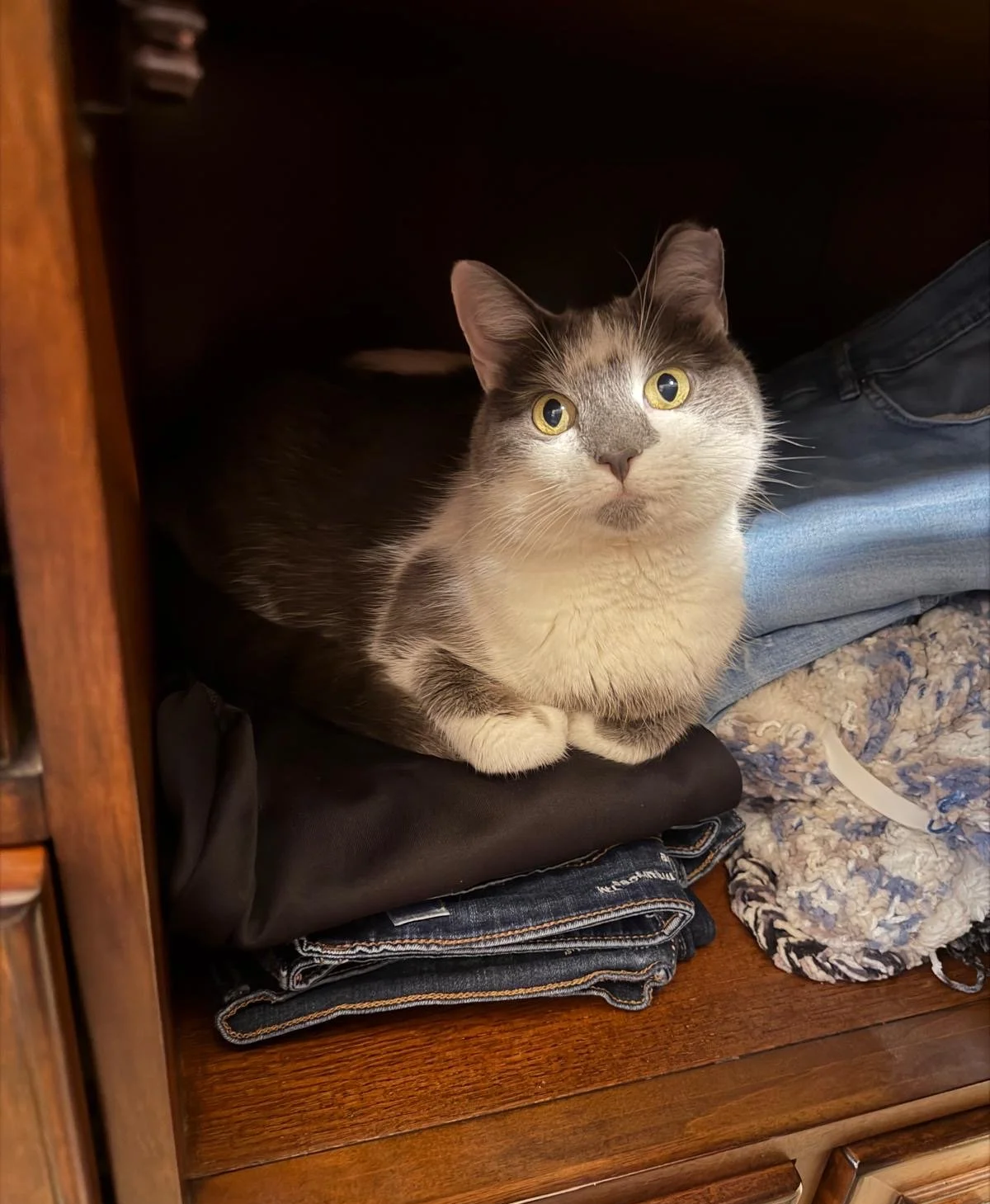
A picture my mom recently sent to me of Patches hanging out at home.
You might be wondering, does this mean Thai cats are somehow different from American cats? Unless they meow in different languages without us realizing it, the answer is no. But I’ve seen the cats in Thailand operate in different contexts. In the rural Thai countryside, pets have specific roles. Dogs are the fierce guardians of the defined borders around their home, sometimes wielding bites to scare off even the most resolute of Volunteers on their bicycles. Comparatively, cats roam beyond confinement, driven by a curiosity to take in all of the sights. They amble about with a sense of fluidity and nonchalance that is reflective of the “jai yen yen” sentiment in Thai culture. Is there an animal more suited to capture the unique experience of navigating life in a new country? For now, I don’t think so. So here is an ode to cats at home and abroad!
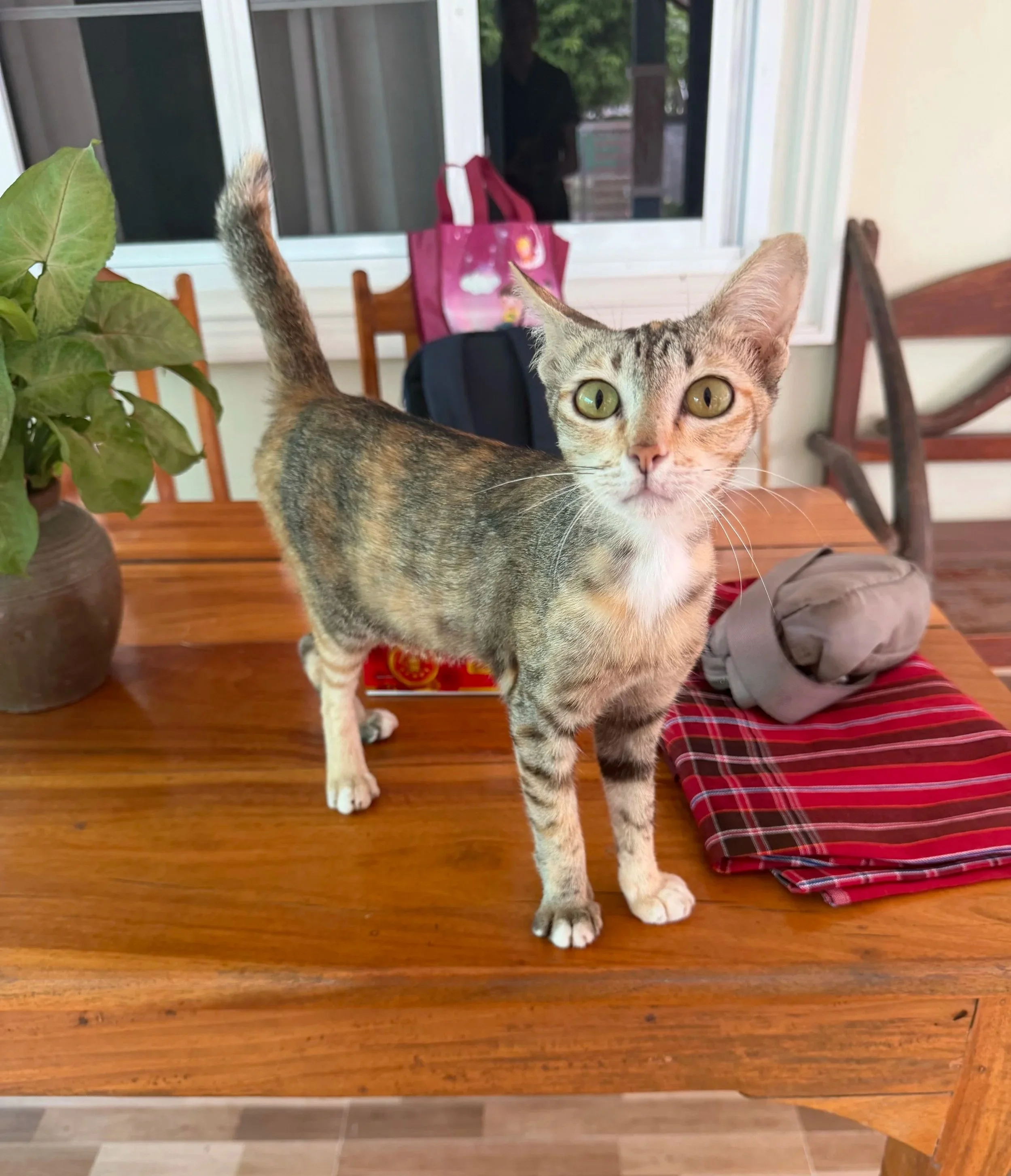
Meet Pepper, the stray cat that Becket and I have started taking care of at site.
Noah Anninger, 137 YinD
The more time we spend together, the more I find myself identifying with the จิ้งจก (jing jok) that lives in my room. Jing joks (Hemidactylus platyurus) are small geckos, commonly found in houses throughout Thailand. Though the sight of one in an American household might raise alarm, here, these creatures coexist quite happily with humans.
I first learned about my roommate when I picked up my clothes to do laundry and he frantically scampered across the room to find a new safe place. From time to time I would catch him out of the corner of my eye, above the air conditioner, beside my backpack, under the desk. Sometimes, he’s out in the open, but often, he gravitates towards the smaller, darker spaces, preferring not to be seen. Since arriving at my site, I’ve felt strong limits imposed on my freedom and anonymity. As my jing jok’s dark body is visible against the white walls, I also stick out in rural Isan. In a place where spending time with others is the default, I nowadays find myself craving alone time, scampering to the spaces where I am less visible.
As much as I seek out spaces where I can rest unseen, I also delight in spending time with others. As I arrive at my host mom’s community store in the heart of the village after a day of teaching, my jing jok also enjoys spending time in the open. Just as my jing jok has no clue what I am doing in our shared space, I am oblivious to the conversations or happenings that surround me. We are both content to exist in the presence of others, no need to know what is going on around us to feel connected, a part of something greater than ourselves. But we often need a break, retreating to the spaces where there are fewer variables to analyze, where it feels as though there’s more within our control. Through spending time together, I’ve learned from my roommate that it is okay not to fit in, to crave solitude, to stand out amongst others. He has made a worthy companion in my first few months at site.
Grace Richardson, 137 YinD
Instincts
The ants are strong and ever-returning, carrying impossible things together with collective endurance, understanding what it means to belong.
The chickens feign confidence while being fundamentally uneasy within a rigid pecking order.
Cicadas, with their seasonal confidence, perform loudly after a long silence, searching for approval in their restless cadence.
Cockroaches charge with false fearlessness—sudden panic disguised as momentum— merely surviving, and thriving through it all with unmatched resilience.
There is a gentleness to the cows; their contemplation and soft curiosity bring a kind of routine comfort.
Huntsman spiders display intricate creations and, though harmless, provoke accidental intimidation just by existing.
Jing Joks use quickness and wit as survival strategies, quietly existing until provoked.
Moving without urgency, the monitor lizard carries itself with ancient self-assurance and emotional unreadability—at least to some.
Mosquitos whine with neediness; persistent, opportunistic, and self-serving.
The nok ge-wao sings with promising optimism—restless at times—warbling fleetingly, but with clarity.
Guarded and strategic, the scorpion observes carefully before striking with precision.
Stray dogs possess adaptability and hypervigilance, wanting safety and independence simultaneously.
Tokays hold steady eye contact and maintain confrontation through stillness, remaining silent for long stretches before suddenly breaking out into chatter.
Moving slowly but purposefully, water buffalo, with their patient steadiness, endure heat without spectacle.
Perhaps I was never meant to be just one.