
BTS: History of Buddhism
Buddhism Through Service is a continuing series dedicated to understanding Buddhism through cultural immersion, historical context, and lived experience. Written by Hana Walsh, the series may also feature guest contributors offering additional perspectives.
Hana Walsh, 137 YinD
No one saves us but ourselves. No one can and no one may.
We ourselves must walk the path.
-Buddha
This article offers a foundational overview of Buddhism, including the life of the Buddha and the two primary branches of the tradition. If you’re more interested in practical insights and application, you may want to skip ahead. That said, this piece introduces key concepts and terminology that will be referenced in future articles, so it may be helpful to read this as a starting point.
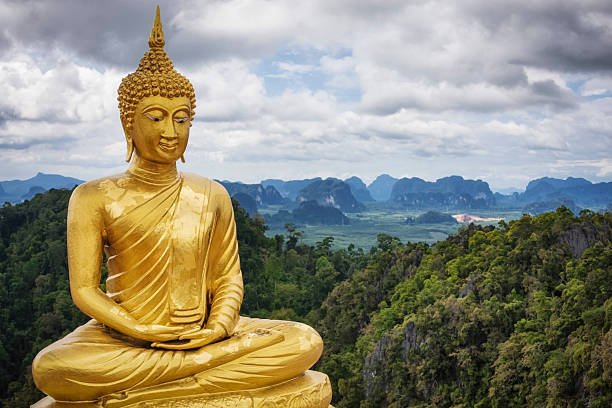
The Buddha
Buddhism originated in ancient India, emerging in the eastern Gangetic plain around the 5th century BCE. The Buddha, commonly known as Siddhartha Gautama, though details of his early life remain debated, was a śramaṇa, a renunciant or spiritual seeker devoted to pursuing higher truth (history.com editors, 2017).
“The Buddha” is not the only Buddha. The term buddha, meaning “awakened one” in Sanskrit, refers to anyone who has transcended ignorance and attained deep insight into the nature of reality. However, “the Buddha” is most often used to refer to Siddhartha Gautama, the historical founder of Buddhism (history.com editors, 2017).
Siddhartha Gautama is believed to have lived sometime between the 6th and 4th century BCE (history.com editors, 2017). While many traditional accounts describe him as the son of a ruler named Suddhodana and his wife Maya, some scholars suggest he may have been born into a smaller clan-based society rather than a royal household (Wikipedia). His exact background remains uncertain.
Regardless of his origins, the Buddha is remembered for his pursuit of liberation from dukkha—often translated as suffering or unsatisfactoriness—and the cycle of rebirth that perpetuates it. This ongoing cycle is known as saṃsāra, and freedom from it is called nirvana (Léo Dérumaux, 2026)..
In his search for liberation, he explored various philosophical teachings, meditation practices, and extreme forms of asceticism. Ultimately, he came to see that severe self-denial was not the path to awakening. Instead, while meditating under a Ficus religiosa tree, now known as the Bodhi Tree, he attained awakening (history.com editors, 2017). In this state, he is said to have understood the workings of karma across past lives, eliminated the āsavas (deep-rooted mental defilements), and brought an end to rebirth.
Following this awakening, he began teaching others the path he had discovered, known as the Middle Way. This approach avoids the extremes of indulgence and self-mortification—it offers a balanced path toward insight and liberation (Wikipedia).
His teachings include core frameworks such as the Four Noble Truths and the Noble Eightfold Path, as well as foundational concepts like dependent origination, karma, and the three marks of existence (history.com editors, 2017). These teachings are collectively known as the Dharma—the body of the Buddha’s teachings and the path he outlined for liberation.
This overview of the Buddha’s life and teachings provides a foundation for understanding the development of the different schools of Buddhism.
Buddhist Schools
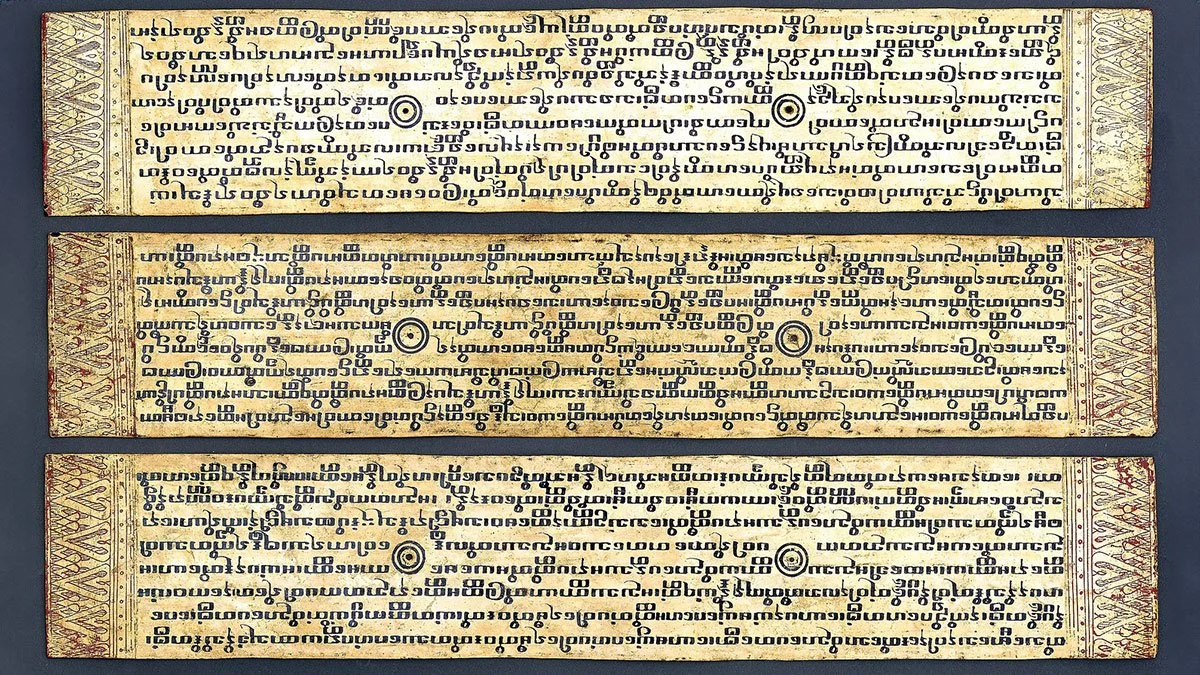
Following the Buddha’s lifetime, his teachings were preserved and passed down orally by his followers before eventually being compiled into written collections known as the Buddhist Canons. These texts exist in several languages, including Pāli, Sanskrit, Tibetan, and Chinese, and reflect a range of interpretations that developed over time. As Buddhism spread and evolved, these differences gave rise to distinct schools, each placing varying emphasis on particular teachings and texts (Wikipedia).
The two major branches of Buddhism are Theravāda (“School of the Elders”) and Mahāyāna (“Great Vehicle”) (Wikipedia).
Theravāda School
Theravāda is the oldest surviving school of Buddhism, with its teachings preserved in the Pāli Canon for over two millennia. Pāli, a classical Indian language, serves as the tradition’s primary sacred language.
Theravāda is often considered more conservative in its approach, as it does not recognize later texts such as the Mahāyāna sutras as part of its canon. Instead, it focuses on early teachings that emphasize the path toward individual liberation.
In practice, Theravāda places strong emphasis on attaining nirvana and ending the cycle of rebirth (saṃsāra). While compassion and ethical conduct are central, the path is often framed in terms of personal responsibility and individual progress. Monastic life plays a significant role, with monks and nuns maintaining close relationships with laypeople (people who practice the Dharma but are not ordained) who support and engage with the teachings in everyday life.
Theravāda is practiced primarily in Myanmar, Thailand, Laos, Cambodia, and Sri Lanka. Given that this series is being written from Thailand, it will likely draw more heavily from Theravāda perspectives (Wikipedia).
Mahāyāna School
Mahāyāna is the largest branch of Buddhism worldwide. In addition to early Buddhist teachings, it recognizes a broader collection of texts, including the Mahāyāna sutras, which introduce expanded philosophical ideas and practices.
A central feature of Mahāyāna is the bodhisattva path—the aspiration to attain full awakening not only for oneself, but for the benefit of all sentient beings. In this tradition, enlightenment is closely tied to compassion and the commitment to help others move toward liberation.
Mahāyāna traditions also include a wider cosmology, with multiple Buddhas and bodhisattvas playing important roles in teachings and practices.
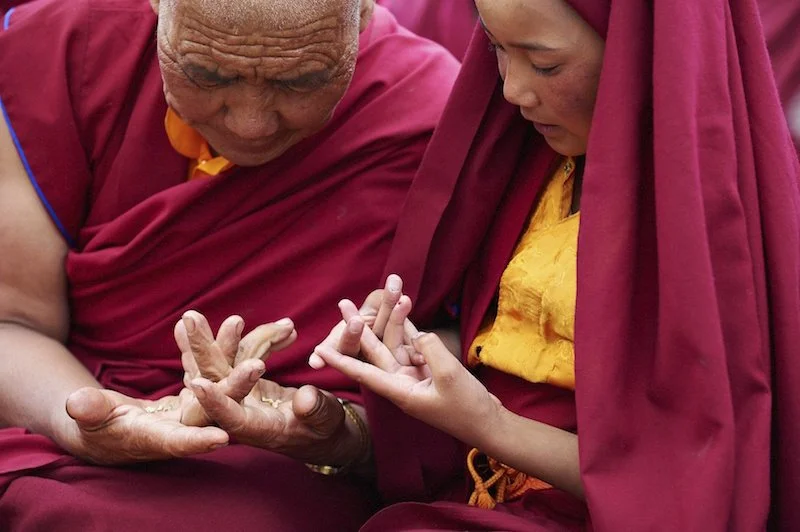
Vajrayāna, often considered a specialized form of Mahāyāna, emphasizes esoteric practices such as mantras, mandalas, and mudrās (symbolic hand gestures), with the aim of accelerating the path to awakening. While less widespread globally, it is a significant tradition in regions such as Tibet, Mongolia, and Bhutan.
Mahāyāna Buddhism is predominant in China, Korea, Japan, Taiwan, Vietnam, and other parts of East and Southeast Asia (Wikipedia).
What’s Next
That’s just a brief overview of Buddhism’s origins and its major branches. If any of the topics in this article stood out to you, feel free to share them in the comments! I’d love any excuse to explore them more deeply in a future piece.
As I was writing this, a lot of personal reflections and questions came up, and I’m excited to start exploring those with you all. In the next article, I’ll share my thoughts on dukkha—where I see it in my own life, and how I think living in Thailand might shape my understanding of it.
References
History.com Editors. (2017, October 12). Buddhism - Definition, Founder & Origins | HISTORY. History. https://www.history.com/articles/buddhismStairway, T. (2026). Temple Stairway - Authentic Buddhist Temple Experiences. Templestairway.Com. https://templestairway.com/blog/what-is-samsaraWikipedia. (2022, October 31). The Buddha. Wikipedia. https://en.wikipedia.org/wiki/The_BuddhaPhotos courtesy of History and Temple Stairway.