A Love Letter to my Province
Group 137 Volunteers have just arrived to their sites where they will spend two years working with their communities. With such a change in scenery in mind, Sticky Rice staff dedicates this month’s group article to the places they have called home for a little over a year.
Tal Carmel, 136 YinD
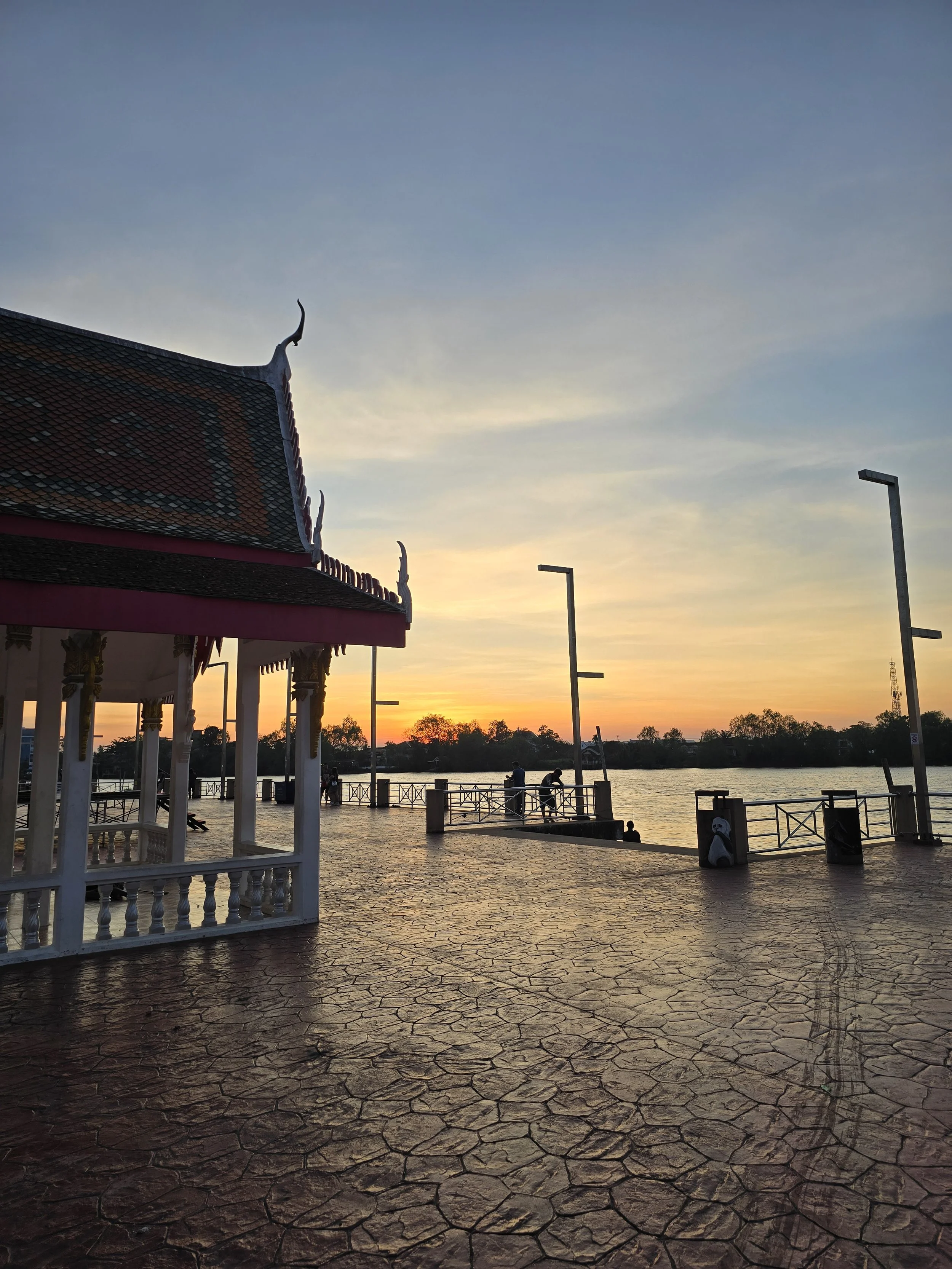
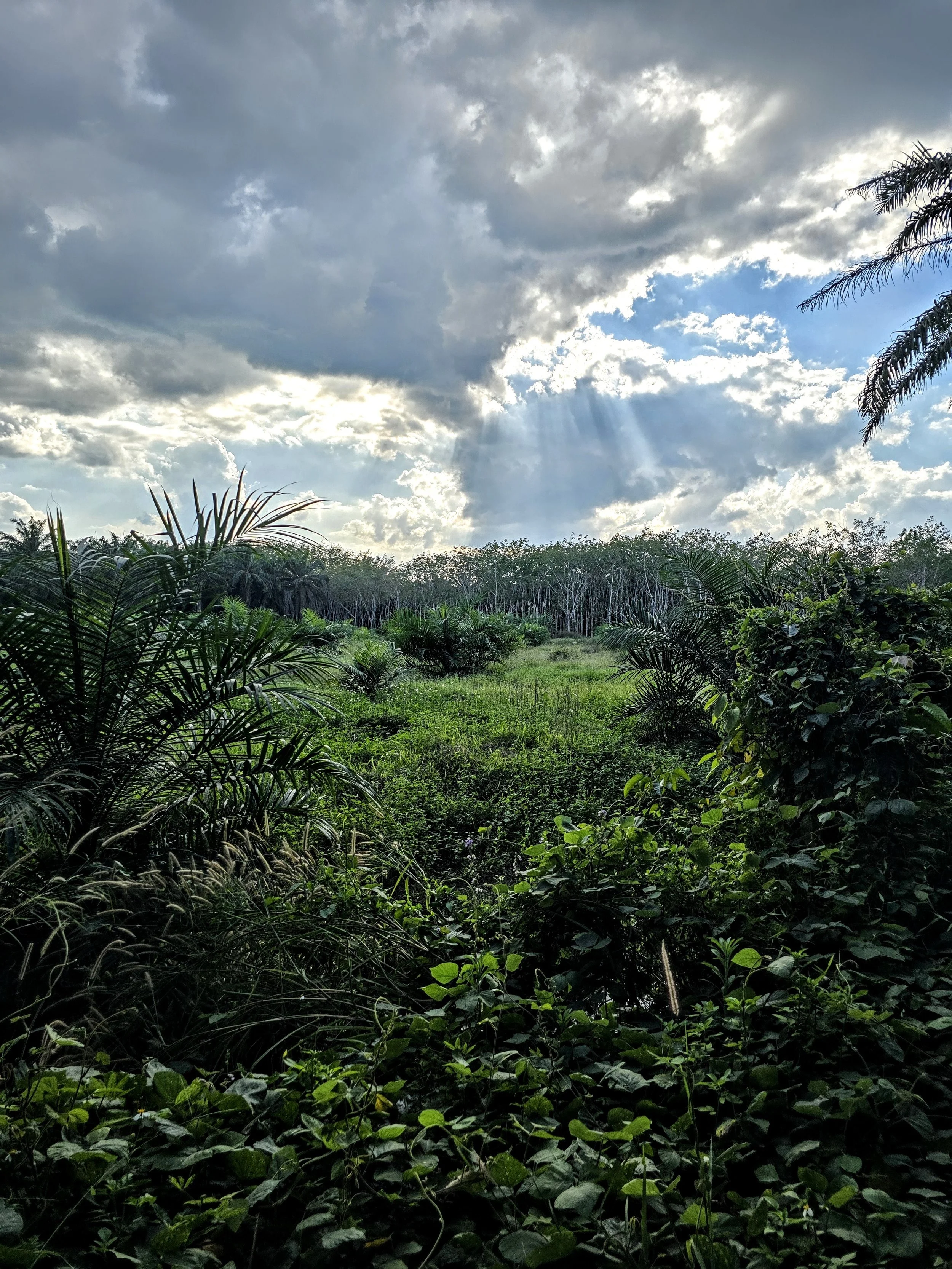
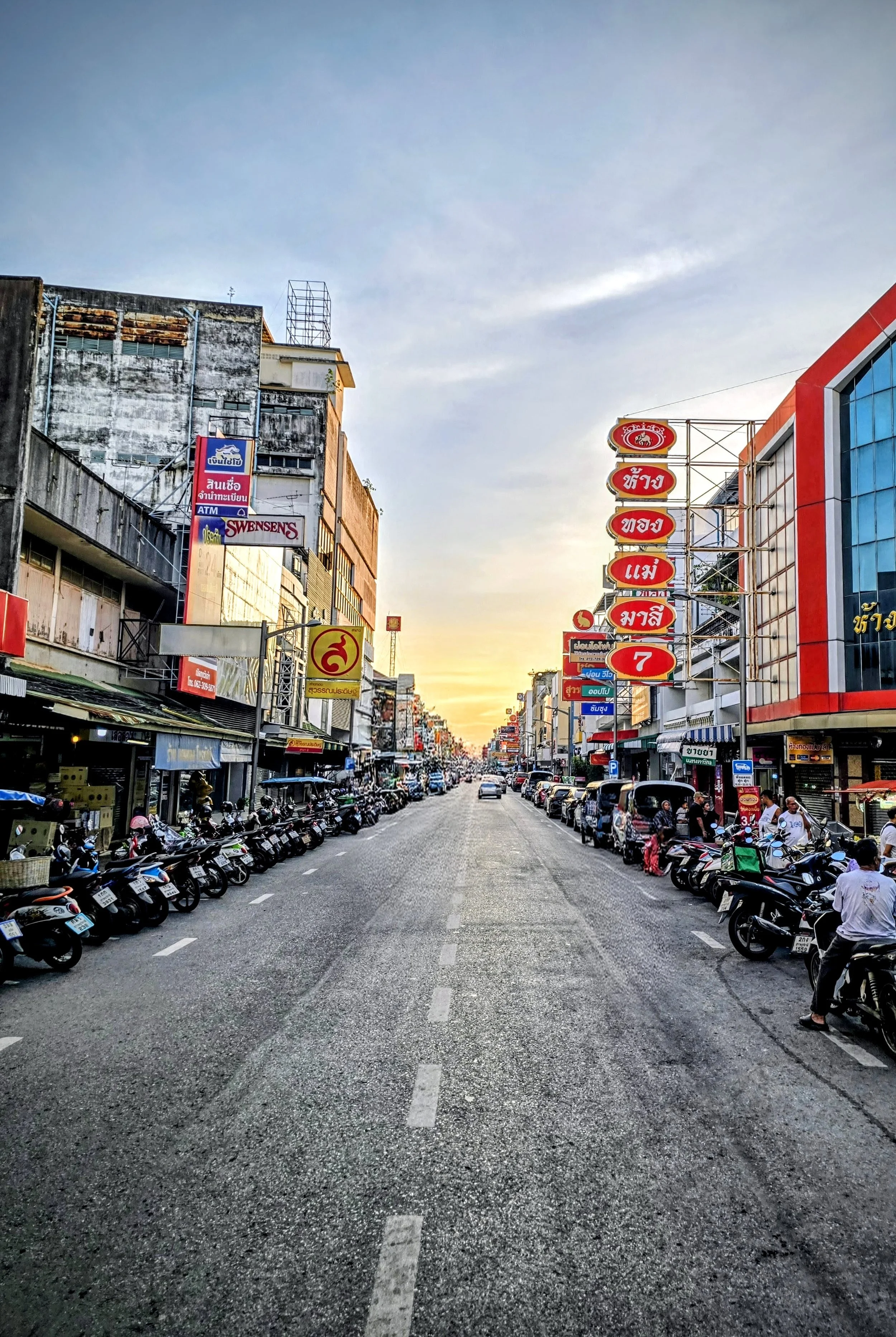
It started with a love for the sea, but now the mountains are the view I call home.
Like so many others when thinking of Thailand, my mind would go to the islands. I had spent weeks traveling around them when I first visited years ago, and to me, they were the dream.
When I joined the Peace Corps, I wanted to be as near to the water as possible. I wanted the calm, the energy, and the freedom it represented. And yes, of course, the gateway to the islands I knew I’d never be stationed on.
I wanted “The South.”
And I got it….but not the way I anticipated.
I was one of only a few volunteers chosen for sites down south, and I remember standing by myself in the middle of the room opening my site package during placement day. I held back tears of excitement as I read the words ‘Surat Thani’, because I knew my joy was other people’s jealousy.
So I celebrated silently.
Surat Thani held a special place in my heart because, years ago, I found myself there for one night, walking the empty streets of a small town,thinking to myself how cute it was and how someday I wanted to come back and explore it properly.
I don’t know if you believe in manifestation or not, but I was, six years later, reading the name of the town I’d never forgotten, and realizing, “I’m going back.”
While I do not live along the beach, and getting to the islands is more of a hassle than it is worth for a weekend trip, I have learned to love aspects of the south that are less “famous”.
I love the way the mountains surrounding my town rise up over the main street as I bike home, and how the people are so expressive without being repressed in the traditional Thai “high context” way.
As much as I have struggled with it, I love the shortened, sing-song cadence of the southern dialect, and how my ears have adjusted so it feels like a secret language only I understand… sort of.
I love how while everyone visits Bangkok or Udon Thani, no one talks about Surat Thani City, my hidden gem.
So, while I didn’t get the beaches I wanted, in the beauty and tranquility of my town, I got what I needed.
Holly Lingenfelter, 136 YinD
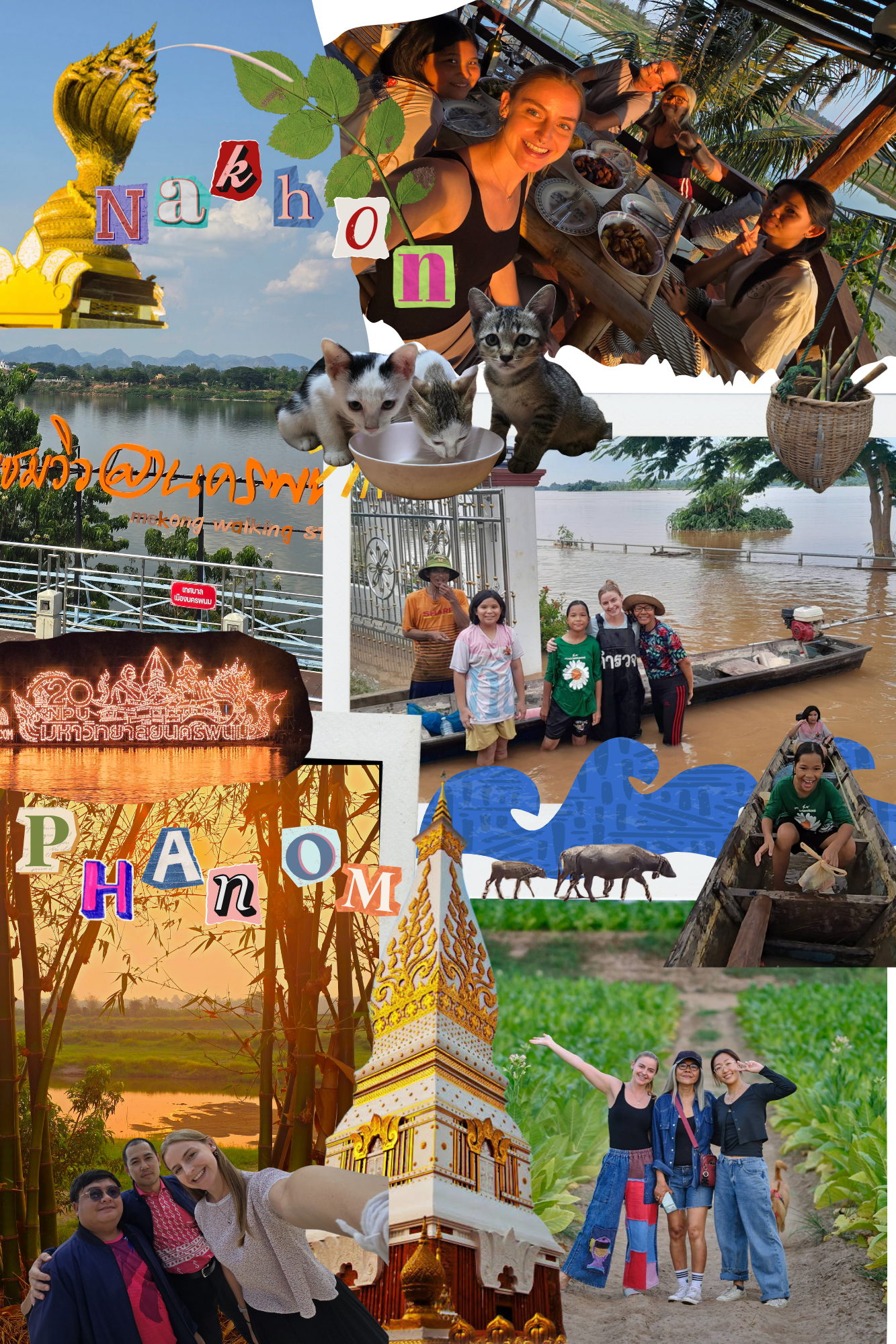
Nakhon Phanom, the city of mountains, that holds none.
And yet, you carry a river, broad and breathing, the Mekong, moving like time itself.
For one year, I have watched you change your shape, as you have changed mine.
In the heat, when the waters retreat, you reveal an island reborn as a community garden.
And when the rains return, you rise without apology, flooding the roads, turning my bike commute into a boat journey.
One year of riding through fields painted in rice and tobacco.
And sometimes, of learning what it means to swim against a current stronger than myself.
There were moments where the connection felt effortless.
Laughter and smiles shared without translation.
And others, knotted in misunderstanding and frustration.
Where words failed, and silence grew heavy.
Still, we stayed.
One year of 250 students, six schools, and countless stories.
Of breaking up fights in the classroom, where young fists spoke what words could not.
And of softer things.
Tears slipping quietly as young feet graduate, stepping forward into lives just beginning.
There have been many tears here.
Some born of loneliness and isolation.
The reality of being a Peace Corps volunteer far from home in an unfamiliar place.
Some born of joy and connection.
The kind that catches in your throat when you see growth, real and undeniable.
And some, the heaviest, from small voices asking if I could stay longer.
Just a little longer, six more years, maybe, to walk beside them as they graduate high school.
But rivers do not stay. They keep moving forward.
Nakhon Phanom, you have taught me to move, to bend, to trust the rising waters without fear. To go with the flow. Effortless and steady.
To sit back when the roads disappear and the world slows.
To savor the view, the company, the sharp, bright bite of som tam, and the comfort of sticky rice shared between hands.
And now, as another and final year unfolds, I hope it drifts gently, like a boat unhurried.
Carrying with it more laughter, more growth, and gardens full of life we never expected to bloom.
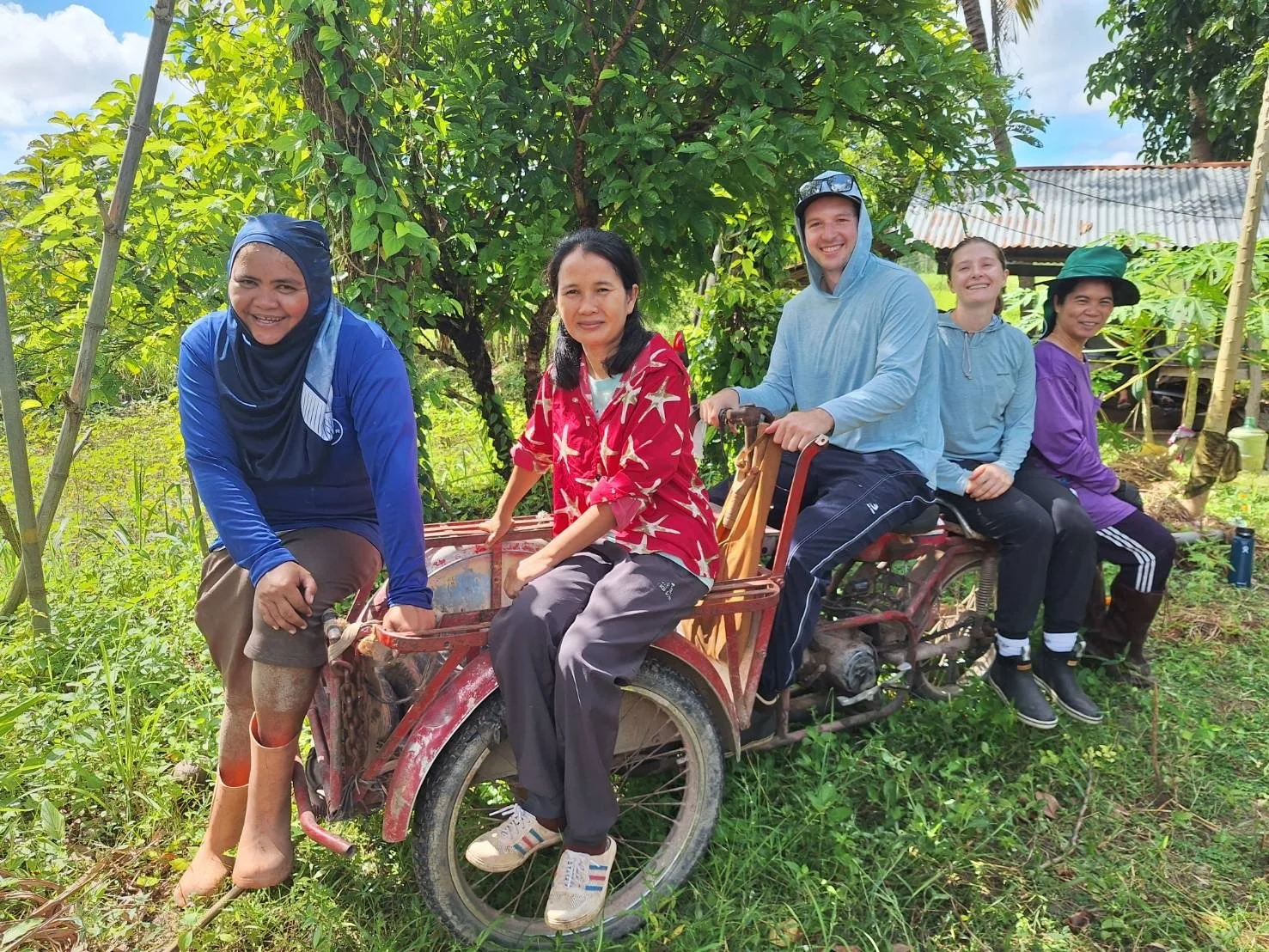
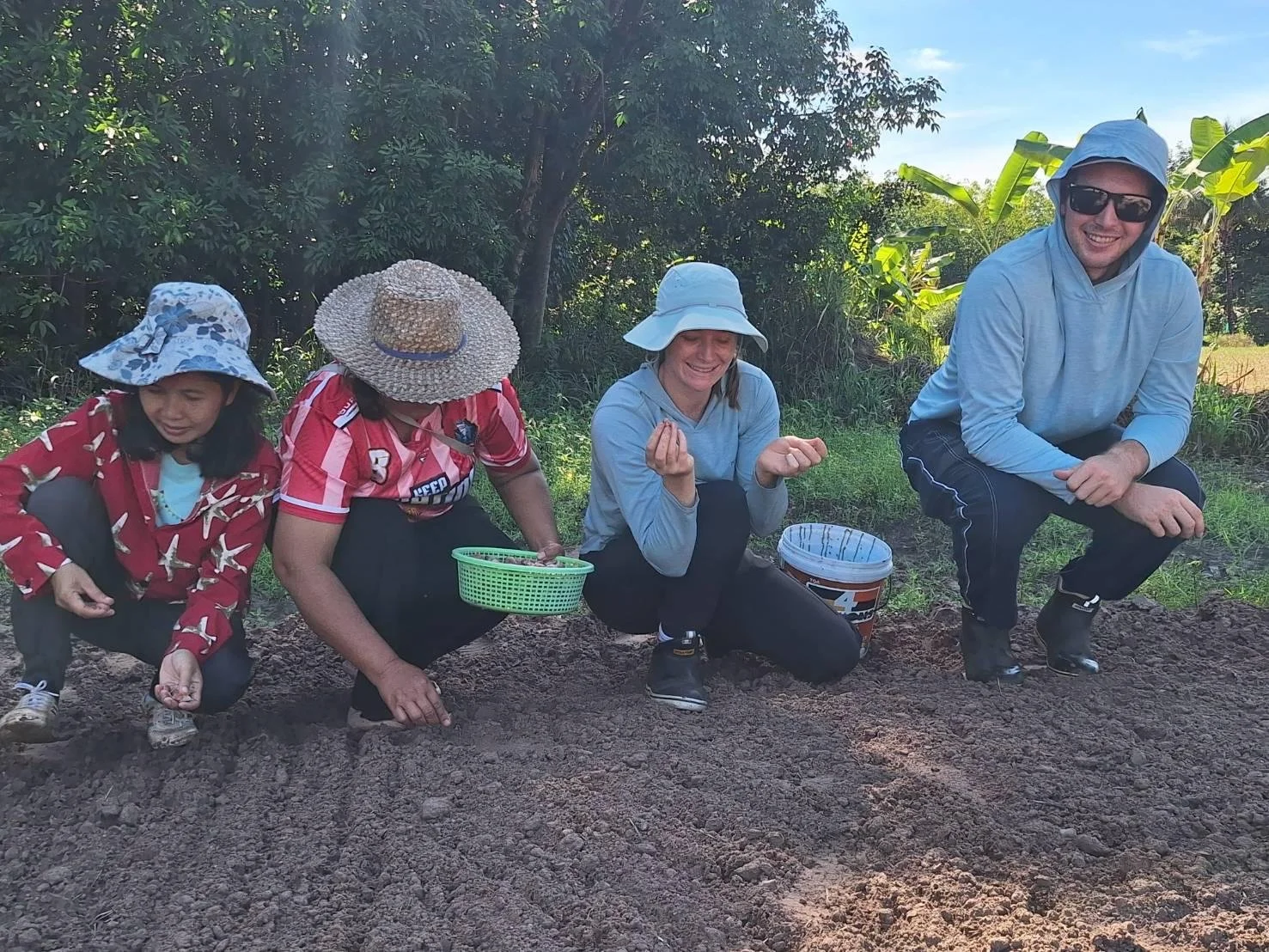
Ella Spear, 136 TESS & Tucker Strauch, 136 YinD
Dear Sisaket,
When we read your name on my site packet just over a year ago, we didn’t yet understand what you would mean to us. It didn’t take long after our arrival to feel the spirit of Sisaket.
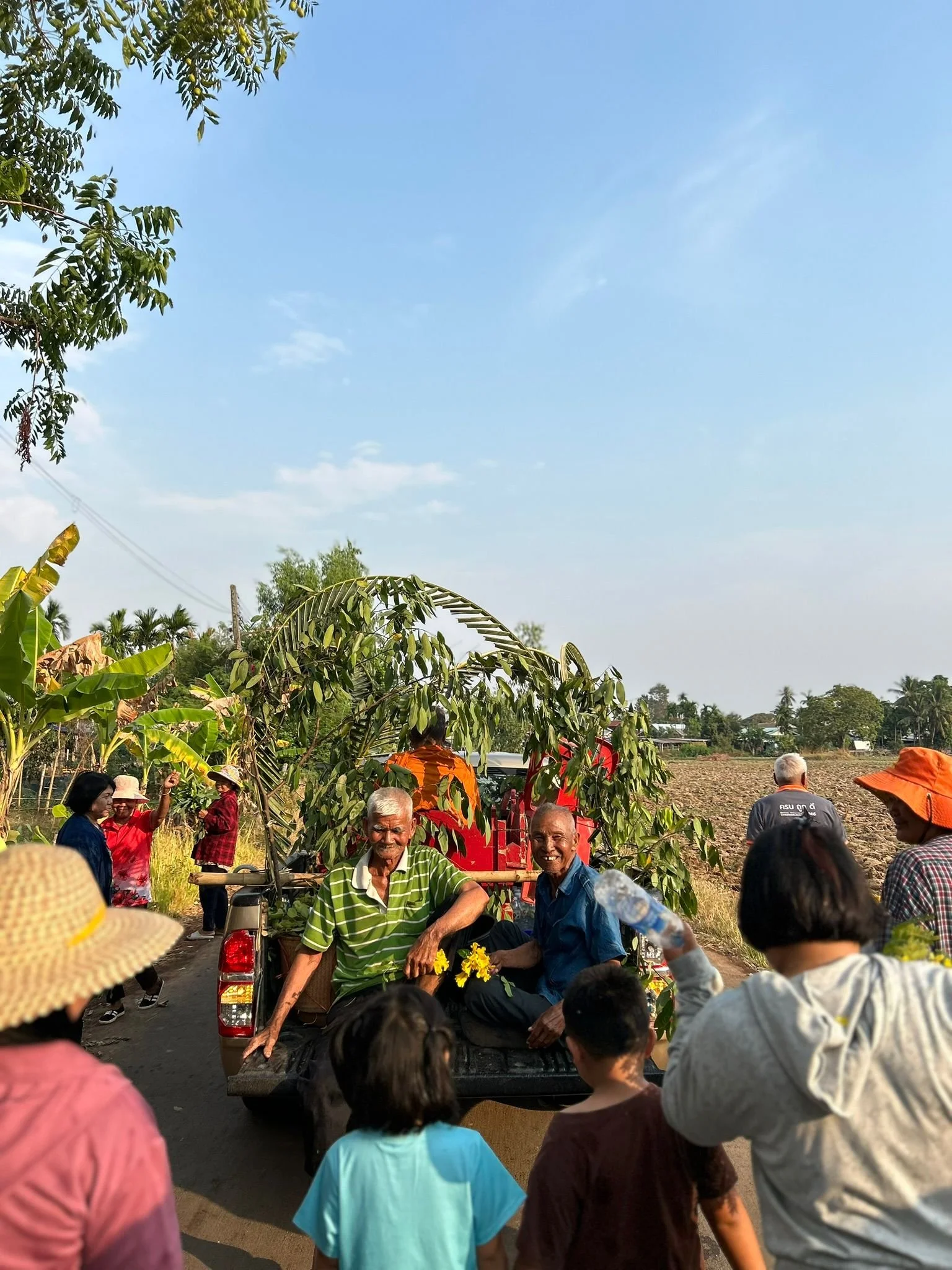
From the moment we arrived, you showed your hospitality, welcoming us with a bai si su kwon ceremony and folding us into every community event and into your family. Your people are fun and easygoing. Through mo lam music, dancing, and laughter, cultural and language barriers were overcome. You treated us as family, simply because we were there to teach your children.
Learning to speak Isaan was put on the back burner with so many other things to manage. Little by little, we soaked in the most common Isaan words and phrases. The smiles and excitement that a few words sparked, from fellow Isaaners as far away as Bangkok, illustrate how language is more than a mode of communication; it’s an identity.
We fell in love with your food at first sight: warm sticky rice in woven baskets, the complex combination of flavor in bpaa-la som dtam, and the herbal richness in geng om. But more than the flavors, we saw what food meant: neighbors cooking for neighbors, families gathered on low tables, entire conversations built around what was being eaten. Your foods are ever-present, and your unique flavors tie communities together.
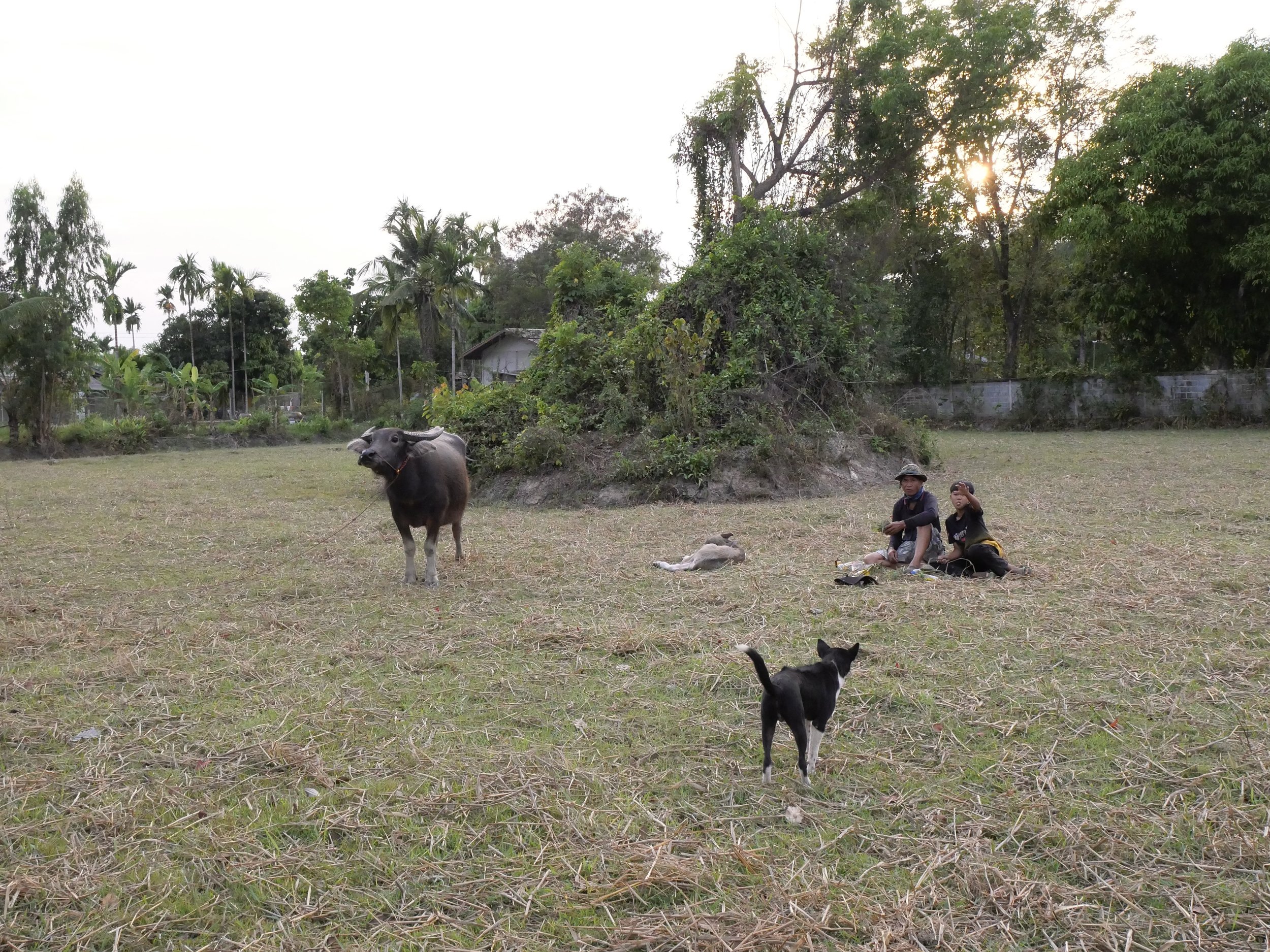
Gold and green are your colors. Some may overlook your beauty. For most of the year, your flat fields lay under a hot haze –a harsh environment even for water buffalo sheltering under sparse trees. But, in the evening light, the shades of yellow and brown in your fertile soil, in the tall grass and the air above, turn to a golden hue that is undeniably beautiful. When the rains come in May, the dust washes away, and, with the first budding sprouts of rice, a new period of rejuvenation and growth begins. Gold turns to green.
It’s clear how the land is a source of great pride to your people. Generations have poured their labor into the same soil, relying on it for subsistence and livelihood. You were built on the backs of farmers who dedicate their lives to your land and the water buffalo that sustain your fields generation after generation. The essence of Isaan is this agricultural identity, built on sweat and love, binding the people to each other and to the earth beneath them.
Through family, language, food, and the land, you showed us the depth of your community ties. Your language serves as a marker of those whose roots run back to Isaan. Your land has welcomed us and provides the food that sustains us. There is a certain rawness in your beauty. Your people have become our family, offering unwavering love and support.
After one year, Sisaket, thank you for the privilege of calling you home.
Gretchen Evans, 136 YinD
It is no secret I rep Mukdahan. I am a ride or die คนมุกดาหา (kon Mukdahan, or Mukdahan-ian(?)). I felt right at home my first weekend at site, as it was my อบต’s sports weekend. The people of my town are incredibly friendly. It wasn’t hard to draw immediate comparisons to southern hospitality in the States. While I no longer had Pang Pang’s, I had หมูกระทะ (muu gra ta) nights with my teachers, paired with god-awful karaoke and lots of Changs. I exchanged an automated 7/11 “Hello, welcome” for a friendly Isaan “ซำบายดีบอ” (Sabai dee bɔ̀?) or “ไปไสมา” (Bpài sǎi maa?) at my favorite corner stores.
My town is wonderful. It is fun. Soccer-driven. Full of different dialects and ethnic groups. A melting pot of sorts. While my central Thai gets me by in the classroom and at soccer practice, I whip out village-specific dialect phrases as some sort of party trick when I encounter an elder pedaling on their bike to their farm.
What makes my province special is its diversity. I can eat authentic Vietnamese food in my provincial city thanks to the Nakhon Phanom/Mukdahan historical relationship with Ho Chi Minh and communities scattered around the two provinces, like the Thai-Vietnamese Friendship village and the Vietnamese 5-Junction. I visit my Thursday morning Laotian market with my landlord, where Laotian people cross the Mekong early in the morning to sell their goods on the Thai side of the river. I listen to my soccer players teach and exchange Pu Thai (ชาวผู้ไทย) and Soe (ไทยกะโซ่) with one another. It is beautiful!
This language and sporting exchange reminds me of when I was a teenager. I was able to play soccer internationally in Sweden, where I represented the state of North Carolina (and on a larger scale, the US). My team communicated in English during our matches (some of us with a strong southern twang), but we were met on the field with Swedish, German, Spanish, and Icelandic. It is a strange and direct experience of the intricacies of linguistics. We are all human. We all love to have fun and do the best we can, using sounds and gestures to do so.
People in my town often ask if I am happy here. They are concerned that I am lonely. My response, especially on a particularly exciting day (like a field trip or scout day), is, “Of course!” Despite the lonely days (you will have them, trust) and pangs of missing my kryptonite, Dr. Pepper, why wouldn’t I be happy?
Jess Smith, 136 YinD
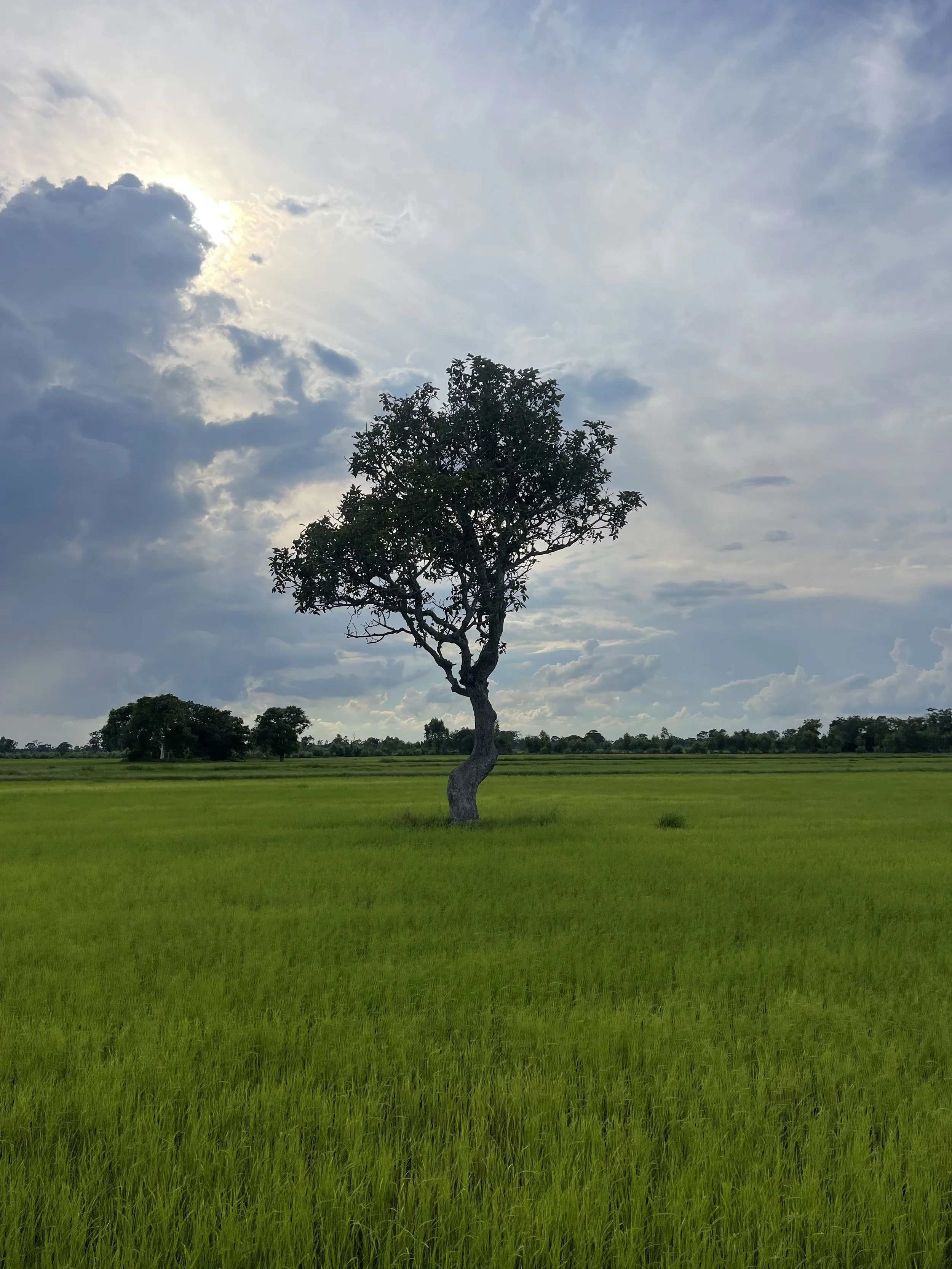
A love letter to Roi Et “101” in the form of a sonnet.
Sonnet 101
My feet familiarize themselves with pedals every morning,
I bike miles through vast green lakes of rice;
Sometimes these lakes lie dry, the earth aborning,
And in their change I find my home concise.
The wind moves through traditionally made kites across the open plains,
Their humming threads the air, a familiar song;
An echo that remains,
As I travel these roads, I know that I belong.
When the moon casts its light and daylight fades away,
Words sometimes fail and silence takes control;
I have found comfort in what was once dismay,
Now I have never felt more whole.
Though I watch the seasons shift from flourishing crop to dry loam,
It is in this change I’ve learned the shape of home.
- Jess Smith