
Integration through Acceptance
Our limited article series, PST 137, features writers who just experienced three months of Pre Service Training in Don Chedi, Thailand.
Noah Anninger, 137 YinD
As the days until departure dwindled and the New Year came and went, it seemed increasingly unfathomable that in several days I was to fly across the country to gather with about 70 prospective Peace Corps Volunteers. We met in a Westin next to the San Francisco airport in a part of town defined by strip malls and chain restaurants. My initial impression of my fellow Trainees was that this was possibly the nicest group of people I’d ever come across.
Over the following weeks, as we flew to Thailand together to begin our training, settled in with host families, and began to experience cultural differences, the cohort would become a safe space to process our shared experiences. I expected Pre-Service Training to feel overwhelming in ways I couldn’t fathom before living it. Indeed, linguistic immersion, cultural and technical training, and limited time to spend with friends gave me the sense that I was reeling through each day, moving through one intense experience to the next. One aspect of my experience that surprised me, however, was the safety and care I felt as I was accepted by my Thai host family.
Every day around 6pm, I returned from a packed day in town to spend time with my host mother, father, and sisters. They live in a house about five miles from town. The evening bike ride became a daily transition between the safety of American culture—built by spending time with the other trainees—to spending my evenings fully immersed as a member of a Thai family.
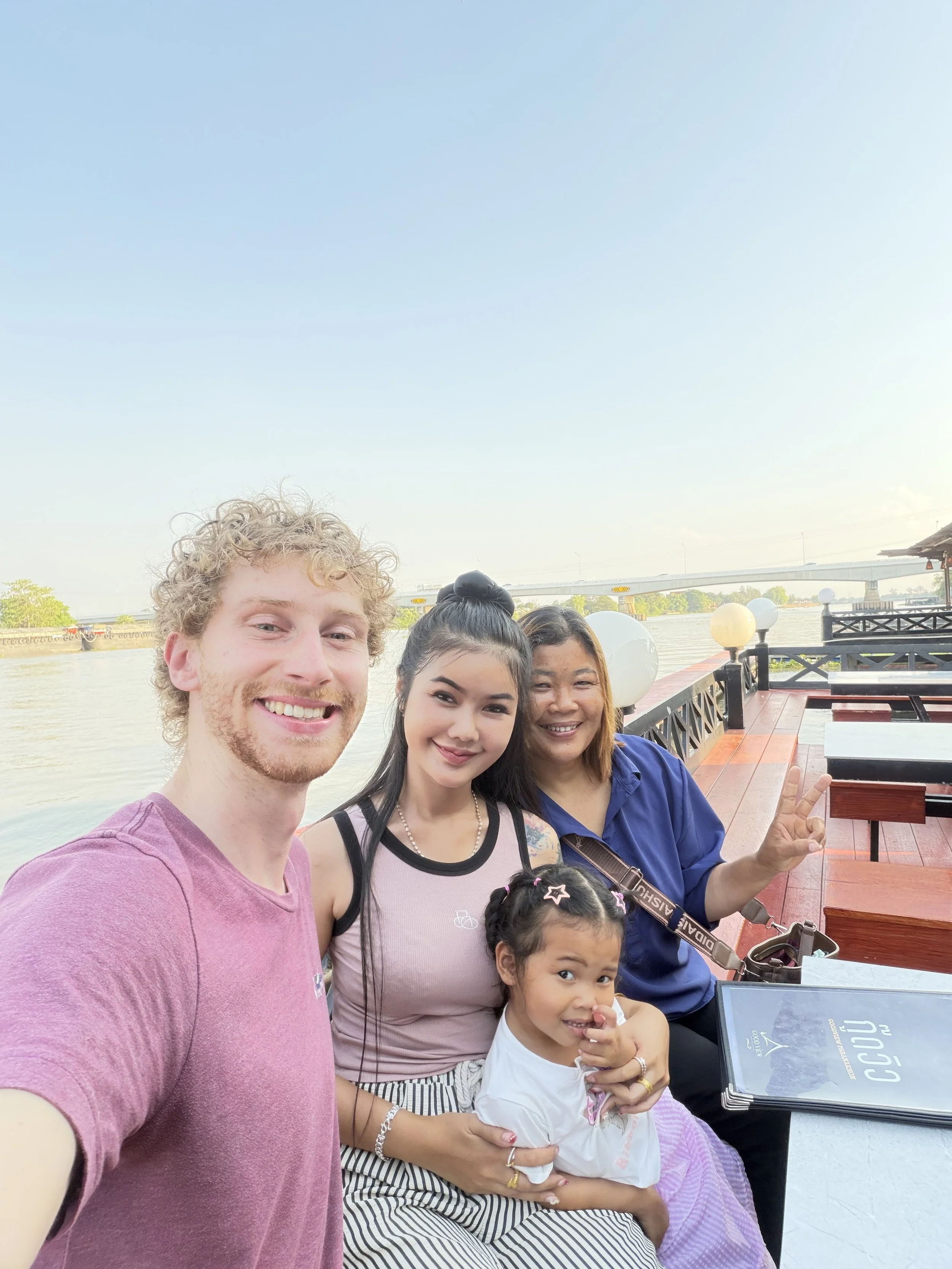
I was initially struck by the fact that despite the cultural and linguistic barriers between myself and my host family, I immediately perceived that theirs was a family of acceptance and love. Though I arrived in Thailand knowing fewer than ten Thai words, their smiles and actions towards me were communication enough, telling me that I was welcome. I felt especially close to my three year old host sister. Connecting through games like hide and seek or building with blocks on the floor of the house, I found play to be a powerful way to share joy and laughter when unable to communicate through words. This made me feel especially excited about the work I had come to Thailand to pursue: teaching English life skills in primary and secondary schools through activities and games.
As the weeks stretched to months and the transition from training to Peace Corps Service neared, I noticed that I’d begun to adapt to Thai culture through the quiet evenings I spent with my host family. Several months earlier, immersed in the American culture of productivity, I would have been restless sitting on the couch during our post-dinner evenings—feeling the need to always be “doing something.” But, those moments with my host family taught me that spending time together was enough.
Ultimately, the culture built within my host family offered a perfect introduction to one of the biggest cultural differences between America and Thailand: the difference in mindset between individualism and collectivism. It was the closeness of these relationships that allowed such integration to take place. Having cultivated a mutual understanding and appreciation of each other, I was much more open to aspects of Thai culture that would have felt baffling beforehand. This attitude of acceptance and openness has allowed me to continue learning from those I feel close to at site as I transition to Peace Corps Service.