
BTS: When Wanting Becomes Suffering
Buddhism Through Service is a continuing series dedicated to understanding Buddhism through cultural immersion, historical context, and lived experience. Written by Hana Walsh, the series may also feature guest contributors offering additional perspectives.
Hana Walsh, 137 YinD
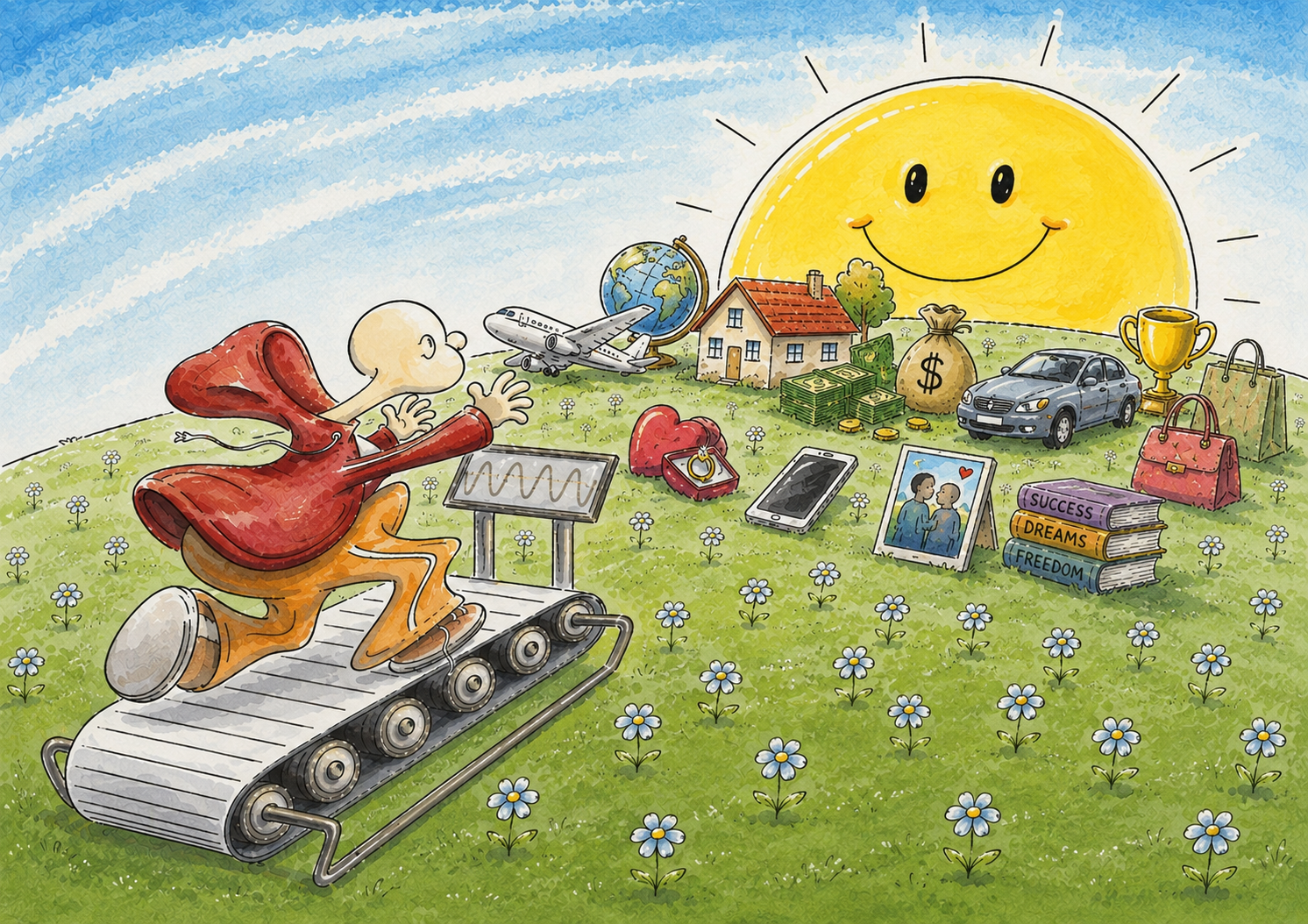
After learning the hard and disheartening truth behind much of the Buddhist culture I observed in the previous article, I can’t pretend that I’m not a bit discouraged. I initially decided to study Buddhism because I saw living in Thailand as an opportunity to experience “real,” authentic Buddhism.
Now that I’m learning how much the Buddhism I encounter has been shaped by Western influence, capitalism, and commercialization, part of me feels cheated.
But I also have to remember that Buddhism is, in many ways, a deeply individual practice. My practice does not have to—and arguably should not—depend entirely on outside influences like other people or my environment. So, if anything, this has become another lesson for me to internalize. I have to make a decision: Do I want my environment to determine how I grow in my practice? Or do I want to continue on my journey toward enlightenment, appreciating the gems of wisdom when and where I find them?
I think the choice is clear.
Once you start down the path, you keep walking. Once you know certain things, you can’t unknow them. And after several years of practicing meditation independently, it feels like it’s about time I commit myself to a tried-and-true path.
So, I continue to practice the way of the Buddha, even though my expectations haven’t been met.
Which brings me to today’s topic: expectations.
Expectations are a terrifying concept for pretty much any belief system that emphasizes meditation, surrender, or faith in something beyond yourself. To expect something is to operate under the illusion that you have control. You anticipate events that have not yet occurred—and sometimes even anticipate exactly how those events are supposed to make you feel.
Many meditative traditions and philosophies advise against this. Rather than trying to control an unknowable future, we are encouraged to step into it willingly and with an open heart.
In theory, this leaves less room for disappointment because you weren’t demanding that the future look a particular way in the first place. Whatever comes, you can meet it, learn from it, accept it, and eventually let it go.
Buddhism doesn’t have a single word that translates perfectly to the English concept of “expectation,” but it does have a word for craving or thirst: taṇhā. This includes craving certain experiences, craving a particular way of being, and craving for something unpleasant to disappear.
Traditionally, taṇhā can be divided into three forms (Koenig, 2025):
Kāma-taṇhā: craving for sensual pleasure or pleasurable experiences—“I want to experience or have this.”
Bhava-taṇhā: craving for existence or becoming—“This is what I want to be or become.”
Vibhava-taṇhā: craving for non-existence or getting rid of something—“I don’t want this to be or exist.”
For my theme of “expectation,” I’m going to focus primarily on kāma-taṇhā, while sometimes using the broader term taṇhā for ease throughout this article.
Kāma-taṇhā is perhaps easiest to understand through everyday scenarios. Wanting to buy the newest iPhone because you’re convinced it will be so much better than your current one. Dismissing a potential romantic connection because it didn’t live up to your vision of the perfect meet-cute. The familiar feeling of, “Once I get or experience XYZ, then I’ll be happy.” Or constantly living in the future, believing that if you just work hard enough, one day that Ferrari will be yours.
We’ve probably all fallen into this way of thinking at least a handful of times.
Living in the future allows us to ignore the present, which can feel pleasurable when the present isn’t perfect. The problem is that the present is rarely perfect. Even when it’s pretty damn good, there’s usually some discomfort, inconvenience, or little thing that could be better.
But the imaginary future has no limits.
You can desire all you want. You can construct an entire fantastical world in your head where everything finally falls into place. But at what point do you stop imagining the life you could have and learn to enjoy the one happening right now?
This is something I’ve struggled with my whole life.
For as long as I can remember, I’ve dreamed about my future life. And even when I got what I wanted, I would almost immediately start thinking bigger. There’s an obvious negative connotation to this—always wanting more, never being satisfied—but for me, it never applied only to material things.
I wanted more in every area of my life.
I wanted better grades. More growth for my business. I wanted to raise more and more money for my soup kitchen. Whatever I accomplished was rarely up to my own standards. There was always another goal, another milestone, another version of myself waiting somewhere in the future.
I was always craving more.
Depending on who you ask, this could be a great trait. I was always the teacher’s pet, and my bosses tended to love me because I would never settle for the bare minimum.
But on a personal and spiritual level, this way of living is exhausting.
Sometimes, I wish my brain would simply say, “Okay. You’ve done enough today. Relax. Enjoy the present.”
In my opinion, there’s a balance to be struck here. In a modern, fast-paced world, I don’t think it’s inherently bad to want things or to set ambitious goals. The problem begins when a desire becomes an attachment—when your happiness becomes dependent on getting what you want.
Once you convince yourself that something you desire will bring you lasting happiness, you also create the possibility of suffering when you don’t get it.
Imagine, for example, that you need an apple pie from the local pie shop for Thanksgiving dinner. You know it’s the best pie. You get it every year. It has become part of your idea of what Thanksgiving is supposed to look like.
Then you arrive at the shop, and the person directly in front of you orders the last apple pie.
Suddenly, you’re furious.
Maybe you’re mad at that person for ordering the last pie. Or maybe you redirect your anger toward the shop for not preparing enough pies for Thanksgiving. Then you drive home upset, and instead of enjoying dinner with the people around you, you spend half the night thinking about the stupid pie you didn’t get (Pure Dhamma, 2022).
See how a simple desire for pie turned into attachment?
The pie itself wasn’t necessarily the problem. The problem was that your happiness—and even your idea of a “successful” Thanksgiving—became dependent on obtaining a specific pie from a specific store.
This is where I see the difference between a simple want and taṇhā.
And again, this is an incredibly important lesson for me.
I want to hold on to my drive to do and experience as much of life as I can. I don't want Buddhism to turn me into someone who stops dreaming, striving, planning, or caring about what comes next. But I also don’t want to become emotionally dependent on those dreams coming true.
If I don’t “achieve” everything on my imaginary list of goals, I don’t want that to determine whether I believe my life was worthwhile.
This concept—taṇhā, craving, and the attachment that can grow from it—may be one of the most crucial lessons in all of Buddhism. It sits at the heart of the Four Noble Truths: the First Noble Truth identifies dukkha, the suffering or unsatisfactoriness woven into conditioned existence, while the Second identifies taṇhā, craving, as the cause of its arising (buddhanet, 2022).
And maybe that’s why expectations are so powerful.
The problem isn’t necessarily wanting the pie, the career, the relationship, the trip, the achievement, or the future version of yourself.
Maybe the question is: What happens to you when you don’t get it?
So now I’m curious.
Where do you see simple “wants” in your own life, and where do you see attachment? How would you define the difference between the two? Have certain wants slowly turned into attachments over time? And have some things you once desperately needed eventually become things you could take or leave?
Works CitedDifferences among kāma Tanhā, Bhava tanhā, Vibhava tanhā. Pure Dhamma. (2022, July 3). https://puredhamma.net/key-dhamma-concepts/key-pali-terms-tanha-lobha-dosa-moha/kama-tanha-bhava-tanha-vibhava-tanha/ Insight in situations. buddhanet.net. (2022, January 21). https://www.buddhanet.net/4noble11/ Koenig, V. U. (2025, August 17). Tanha - attachment and clinging. BuddhaStiftung. https://buddhastiftung.org/tanha-attachment-and-clinging/